Author Archives: Aiden S Clarke

Unknown's avatar

About Aiden S Clarke

Aiden S. Clarke is an author who focuses on the American desert. His stories generally involve a cast of colorful characters based out of Barstow California. The setting is the 1970s-2000s, a time when Route-66 was fading and the new Interstate-40 was nearly complete.

La Fierabrosa Part-14

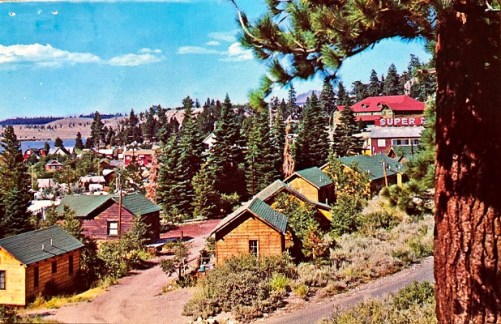
CherokeeLodgeSml

Cherokee Lodge, June Lake, CA

La Fierabrosa: A Lyndy Martinez Story, Part-14

Link to Part-1: La Fierabrosa Part-1

Lyndy Life Tip # 167: Just because an item is touted as being “new and improved” doesn’t mean it’s any better than the old version.

Something was inherently cowboy-ish in the way Julia Russell looked at other people. When she did, one felt as though she truly saw you. In contrast, persons in the city were able to look right through you as if you were Casper the friendly ghost.

Russ bent forward at the hips. Positioning her nose one centimeter from the sheet of paper and squinting, her face took on a look of bewilderment as she scanned the text.  “Actually, someone deposited that thing-a-ma-bob under my wiper blades while I used the ladies can at the truck stop,” she explained.

If this were all theatre, Russ was doing a commendable job of pretending to read it for the very first time. Straightening her back, she added, “I have never heard of nor been to that particular event.” With her swiss army knife Russ popped the cap from a beer and took a swig. “Sounds like a hoot of a time though.”

“I see,” said Lyndy, lowering the flier.

Waiter, check please.

“Miss Martinez, might you be accusing me of something in a roundabout way?” This time, Russ’s voice had lost all cheeriness. And it was practically universal that older adults only addressed you by the terms “miss” and “mister” when they were agitated.

Russ waved her beer bottle toward the open range, which hugged the roadbed on both sides. “Do you really think I’m stealing cows out here, even though you’ve seen my ride?”

Lyndy backed away, feeling anxious and ashamed. She pretended to be interested in the many bumper stickers on the CJ-7. It was time to make for the exits.

“Russ, if I ever needed to find you again, where would I have to look?” she demanded.

Russ directed her thumb west. “Gotta get back to my home in Norco. Husband probably thinks I’m dead, organized a search party, and hasn’t taken out the garbage since I’ve been missing.” Russ shrugged her shoulders. “Sure ya don’t want a beer?”

Who wouldn’t want a cold brew on day like this?

There were two brightly colored bumper stickers standing out amongst the others. The first read: Let Freedom Ring, 1776 – 1976; the other: Study the Past.

“Thanks for offering, but really I’m good,” said The Spitfire, patting her stomach around the beltline. What a lie.

Lyndy had seen her share of decals celebrating the bicentennial, but never one for history buffs—though the concepts went hand in hand.

As she drove away at needlessly slow speed, Lyndy observed Russ in her rearview, using her eyes and not turning her head. Russ was shading the precious camera with a canvas tarp, as she worked on changing out film. You only got a max of 12 exposures for a whole roll of 120 film; only artistic types or otherwise obsessive people bothered with those.

“Damn,” Lyndy whispered under her breath. Russ was pretty helpful on information. “What idiot steals a cow anyway? Why not rob any corner liquor store and call it day? Takes less effort.”


You know what the real problem with human aging is? There are no new privileges gained between 25, when you’re finally allowed to rent a car, and 55, when you start getting those senior discounts. It leaves a gap of 30 years with essentially nothing positive to look forward to. So how about these novel ideas: When you reach your thirtieth birthday, you get to cut in line at grocery stores and amusement parks. When make it to 35, you’re legally allowed to ignore and set aside one speeding ticket per year. When you reach 40, you get to use those emergency exit slides once a plane taxis to the gate, so you don’t have to wait for all the bozos who take forever to move out of the way.

Lyndy exited I-40 at Essex road, twisting her wheel to the right for the Providence Mountains and Mitchell’s Cave. Except she was aiming for the more obscure JBR ranch headquarters.

Beneath a line of classic western mesas, the collection of one story ranch buildings blended well with surroundings. The only reliable way to identify them was by searching the horizon for wispy clouds of dust drifting skyward from the corrals, places where horses were trained and cows branded the old-fashioned way; perhaps the only way.

Lyndy navigated the unpaved access roads, her tailbone hammered by a combination of shoddy suspension and washboard bumps. She was thirsty, tired and in a lousy mood. Mind you, this whole expedition was doing nothing to help Chan’s case.

Why again was she putting herself through it? Another hour of driving would bring her to The Vanishing Point roadhouse, where she could slouch in an air-conditioned booth and suck on Herradura—all while Catherine waited on her in a cornflower blue uniform.

Perhaps it was time to state the obvious fact; what she really wanted from this young man was neither cash payment, nor a diverting mystery; it was elemental. But he was acting blind to her affection. The Spitfire had to conclude she was not his type, or he simply wasn’t into girls at all.

Most outsiders, but especially the tourists, were unwelcome here. The JBR existed as a place of serious business, not a museum. Male energy ruled. The Spitfire’s normal approach was to seem focused as a laser beam, or downright aloof: “Give me what I want and I’ll leave.”

Except this time, she had to let her eyes wander, allowing them fall on each and every mode of transport. It wasn’t about Internationals, almost any make could be the one she was searching for. Beat up as they were, everything she studied had the same problem. They each had matching hubcaps or wheel covers, equipped with standard width axles.

She stopped the burgundy Jeep alongside a corral fence, where the commotion seemed to be centered. Lyndy waved excitedly at two cowboys. These ranch hands knew her only in passing, but nodded in recognition, certainly having heard stories.

Lyndy ditched the blue hat, applying lipstick and brushing out her hair. Her clothes were filthy. Nothing would compensate for her outfit, but she would try. At least the rugged cowboys were unlikely to notice her shabby appearance.

With a measure of resolve, Lyndy marched herself to the fence and hopped up to perch on the middle of three parallel boards, gripping the top-most with her fingers.

A rider on horseback was concentrating, paying no attention to new arrivals. His palomino horse was being trained to work with a calf. Its nostrils were flaring, as it breathed heavy from exertion. Each time the animal cut right or left, the young horse was supposed to block its path, as the rider was commanding. From the boisterous laughter, Lyndy could tell it wasn’t going well. Also pacing the corral, a border collie kept barking, seemingly mocking the horse for mistake after mistake.

Lyndy shouted across to one of the men, asking for the location of Ted Crawford. Wordlessly, the man tapped his arm, pointed further up the valley, flashing two fingers from his gloved hand. The latter indicated mileage. As expected, funny looks were exchanged. Ted was likely in for a round of ribbing later at mealtime. But at least he was still here, not having left for another opportunity.


Water for the ranch was sourced mostly from underground aquafers. Lyndy found Ted at one of the main pumping stations, marked by two galvanized metal cisterns on wooden platforms, and a rustic windmill. Nearby was a twenty-foot long cattle trough, green with algae, but depleted.

Ted was straining with a giant pipe wrench, leveraging with both arms. All the muscles in his forearms were flexing, the veins enlarged. Perspiration soaked the front of his shirt, stretching down to his belt buckle. Ted’s favorite horse, a mare named Gilda, was tied loosely to a nearby post. Where shoots of green grass were watered by the leaky pipe, Gilda had her head down, searching for something edible to graze on.

The Spitfire parked several yards away. Before interrupting, she leaned against the front fender shielding her eyes; she wanted to think, and down a Tab at the same time. Long before she knew his name, Lyndy had seen Ted Crawford digging a ditch beside the roadway, with only a pickaxe, in 110-degree weather, hotter than this day. At the same time, one of his lazy colleagues was taking a nap in the shade.

He had no hat on his head, Ted’s brown hair smoothed down by sweat. Lyndy quickly scanned the scene, locating the Stetson dangling from a valve handle. That was one test of a real cowboy; any danger of a hat getting dirty or trampled by stock, and they simply stashed it in some safe location. Kinda defeated the purpose. But it was worrisome too, given the way a desert rat like Russ looked now.

Pausing to catch his breath, Ted finally turned his attention to The Spitfire. Perhaps he’d been thinking too.

“I just don’t know how you can drink them things,” he remarked. “Taste like 30-weight motor oil with fizz.”

Lyndy glanced down and crushed her empty can of pop. “So, I have one question,” she replied with a coy smile.

“Go right ahead miss.”

“Does anybody really like sloppy joes? Or is it possible we’re experiencing some mass societal delusion, brought on by TV commercials hocking worthless tomato paste?”

Ted couldn’t help but chuckle, even though his expression indicated frustration. He shook his head at the ground.

“What? Am I right?” asked Lyndy.

“Thought you were gonna say something profound. You realize we got a real nasty clog in here somewhere?” Ted pointed to the metal pipe.

Boy, you can say that again.                                                                                                                                             

Lyndy pushed back her bangs. “Hey, I thought you got fired?”

“I’m on suspension without pay. Maybe I stretched the truth.”

Lyndy raised her arms in disbelief. “Wait, you’re doing work and ain’t bein’ paid?”

Ted shrugged. “I get bored easy.”

“Oh god.” Now, Lyndy was doing the head shaking. “Look dude, I worked on your case all today, as promised.”

Ted’s face perked up, hopeful.

“But I didn’t get anywhere,” Lyndy added gently. “As a matter of fact, I got very stuck. One of your cows tried to kill me. Then I accused somebody of being the black hat cattle rustler, but I know I was wrong. I felt stupid as the day is long, and they probably hate me. But I found one thing out, the hubcap you drew came from an International Scout. In fact, technically it’s a wheel cover.”

Ted sighed, his legs wobbly. He staggered up to Gilda’s side and grabbed the reins for support. “Startin to think I might have to break down and pack my shit. You know, hit the road and maybe look for another job in a different town—hopefully somewhere nobody will recognize me.”

Gilda started nuzzling up against Lyndy’s shirt, checking the pockets.

In response, Lyndy set her hands-on Gilda’s muzzle, lightly stroking it. “Man, this place would go to hell in a handcart if you left.”

“I bet that’s an exaggeration,” replied Ted. “But I appreciate your sentiments.”

“Sure, you don’t need any money?” Lyndy pointed to the Jeep, and her purse.

“No, I’ll be okay.” Ted lifted his shirt, dabbing his forehead to soak up the sweat.  “Did you know my dad is a heart surgeon? Can you believe that?”

“No,” said Lyndy, genuinely surprised.

“He disowned me. I’ve let him down more times than I can count.” Ted stared to the east.

“Please don’t give up. Not yet,” argued Lyndy. “Trust me. I’ll figure it out.” Lyndy pushed up her sleeves, stomping gingerly to the wrench. It was still jammed in the same position on the steel water pipe. She tested her weight against it, and of course it didn’t budge. She tried pushing on it with her butt, but that didn’t work either. So, she twisted back forward. “I mean, I get fired practically every week from my job at Chan’s. And I must have done something to let my parents down, because they dropped me like a hot potato when I was a baby.” Lyndy pushed until her feet slid away like a cartoon, and she was leaning forward on a 20-degree angle from the ground. Her whole body was shaking from holding the awkward position.

Ted watched with his fingers laced behind his head. He knew it wasn’t going to move.

Looking backward over one shoulder Lyndy cried, “Let’s try this together. I need real muscle. Put yer hands over here.”

“You’re trying to nail Jello to a tree, Lyn.”

“No. This will work.”

“I have a better idea.” Ted smiled and pointed to Gilda. “I think she likes you.”

Lyndy turned to face Ted, raising both hands in protest. “Me on Gilda? Not a chance!”

Ted grabbed hold of Gilda’s reins, while leaning against one of the cisterns. He coaxed her closer to Lyndy.

“Lyndy doesn’t ride horses,” she added.

“Why not?”

“I’m too old to learn to ride,” Lyndy argued.

Gilda snorted, almost as though she knew what topic the humans were discussing.

“You mean you’ve never ridden a horse? How is that possible? And Lyn, we’re pretty much the same age.”

Lyndy frowned, embarrassed of the truth, fearing she’d fallen a notch or two in Ted’s eyes.

“Not even at a county fair, on one of them kiddie rodeo circles?”

“Nope.”

“Well you’re never too old to learn to ride a horse,” he asserted.

“That sounds like something out of a fortune cookie.”

“Well, the greatest thing bout riding a horse is how tall it makes ya feel. Your mind clears as you see everything from a new perspective.” Even in this weather, working his ass off, Ted’s blue eyes shone with youthful verve.

“Not interested.”

Ted grinned at the reluctance, holding his hand level and 3 feet off the ground. “Man, I remember one time I seen a five-year-old Navajo girl—she couldn’t even use a saddle cause she was too small—but she grabbed a horse’s mane and somehow pulled herself up. I mean this was a full-sized paint gelding, much larger than Gilda. Didn’t have no bridle or nothin. And that little girl could control an animal 25 times her weight, as well or better than any cowboy I ever knew.”

“Thanks, but I’d rather drive places,” said Lyndy. She stuck the sunglasses on her nose, preparing to leave.

“Look. How can I trust you, if you can’t even trust me,” said Ted.

It was a fair point. Lyndy’s sharp tongue failed her.

Suddenly, as if timed to the silence, a most precious resource came shooting forth from the end of the rusty pipe. A fountain of pure clean water sparkled in the sunlight.

“There you go,” said Lyndy. “Finally.”

“What the hell did you do?” asked Ted in disbelief. He went rushing over to check on things, putting his head near level with the trough. He stuck a cupped hand in the flow and sipped from it, as though checking whether it was truly water, and not some mystery substance.

Feeling smug, Lyndy shrugged and smiled. “Nothin,” she said, after slapping her hands together. And she knew she hadn’t done anything; it was coincidence.

A moment later Gilda trotted over, testing the water herself.

Lyndy walked off to retrieve Ted’s hat.

“Hat’s work better on yer head,” she scolded. “And I ain’t done with this case yet. Gotta get back to town, but I’ll definitely update you tomorrow.”

“Fair enough,” muttered Ted.


Minutes later …

Cracks of thunder were piercing the thick, humid air. As Lyndy drove at top speed to Barstow, crosswinds continued to strengthen; it was those same storms which earlier darkened the western skyline.

Most any day, such a cleansing rain would feel welcome. But in addition to mega-size droplets, the tempest brought with it an abrasive blow-sand.

In the open top Lyndy was suffering; even through sunglasses she squinted, keeping her eyelids as slit-like as possible. As soon as there was an opportunity, Lyndy pulled off and into a lonely rest stop at Newberry Springs. Not another soul was there.

She took shelter beneath the brick awning, pulling her shirt up to cover her nose and mouth. Anytime she tried to leave, her shirt and hair was battered all around, putting strain on her scalp. She might have entered the ladies room, but the smell of those pit toilets was overwhelming, so she huddled in a corner.

In a few minutes she crouched down on the steps and started talking to herself, her words drowned out by the storm. “Come on, now would it have killed you to say yes to Ted? Could have told him you’d ride the horse if he agreed to bring you to the damn party.” But the opportunity was lost.

Sounds of small children laughing roused Lyndy from her funk. A Hispanic family had stopped their camper van so they could all use the facilities at the rest stop. The kids thought the howling wind was fun. It had calmed somewhat, but they were laughing at the blowing sand too, holding up beach towels like pirate flags.

“God, I used to be like that,” thought Lyndy.

One person’s life-threatening event was nothing but a trifling inconvenience to another, or a novelty. Perhaps she was taking life too seriously.

The Spitfire decided she should hit the road again.


By the time she pulled into Barstow proper, it was late in the day and some of the street lamps were turning on. As she angled onto main, Lyndy noticed a fervor had overtaken the business district. Stores were emptying out, closed signs going up. Folks were diverting all cars off the street. Lyndy was forced to park the Jeep half in the road and half on the sidewalk. The atmosphere was riot like.

Lyndy had never seen ordinary citizens drop everything and start running en-masse, certainly not in Barstow. Something extraordinary was about to go down, and having been in the backcountry all day, she was caught unaware. Still several blocks distant from Chan’s, there was no way to get to the office except by foot.

For a moment, Lyndy pondered if there was some town celebration she had not heard about or else ignored. Quickly she dismissed the possibility, since it seemed so haphazard. This was closer to a UFO landing.

Curiosity killing her, Lyndy spotted a trucker who appeared to be rushing to the scene. She grabbed his shoulders and pleaded, “Hey, I just got here man. Please, what’s happening?”

He took off his hat and slapped his thigh. “Damn fool in a Datsun 280 challenged Tammy to a street race. She kept shrugging it off, but then he said American cars are trash—some junk like that—and it was on! Somebody said he’s a for-ner person. Gonna happen in like five minutes.” The man twisted and rushed away.

“Holy smokes!” thought Lyndy.

In a confusing herd of people chattering impatiently, men passing around wads of money—placing bets—women holding purses, dabbing cheeks with handkerchiefs, Lyndy stopped to think.

There were no law enforcement types to be seen. Normally, you’d spot a cop here or there, leaning on a sign post or black and white car perhaps; or at least a few Deputy Keynes wasting time eating sunflower seeds. Right now, nada.

Lyndy folded her arms, putting one finger on her lip. It felt like something more than your average small-town street race, moving into a category of diversionary tactic. And that was concerning. But she took a breath, then sprinted to see if she could catch a glimpse of the race.

Somehow, the puzzle pieces that never fit were moving closer, converging. Of course, Catherine would be in the middle—had to be.
La Fierabrosa Part-13

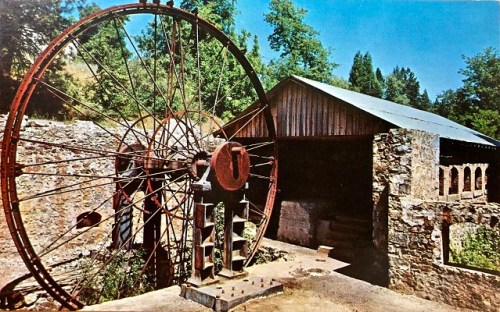
GrassValleySml

Pelton Wheel, Grass Valley, CA

La Fierabrosa: A Lyndy Martinez Story, Part-13

Link to Part-1La Fierabrosa Part-1

Chemehuevi Indians inhabited this region of the Mojave for centuries. To thrive in such an unforgiving environment, tribe members roamed over tens of miles, harvesting seeds and nuts along the way, or trapping small game, such as birds and rabbits. They succeeded where other tribes failed, making a home, in a destination most Americans considered intolerable, by adopting lifestyles in harmony and balance with the land. They didn’t have concrete dams, electrical transmission towers, an interstate highway system, or viaducts and Byzantine irrigation canals to depend on. Though it wouldn’t support a large population, the desert provided for nearly all their needs. And what they didn’t possess, they bartered for with other tribes.

Feeble and wilted against the tailgate, The Spitfire was wishing she could trade in her bag of tricks for theirs. She knew she would never be as confident as them, traveling alone and on foot in a place where virtually all God’s creatures wanted to poke, bite or sting you.

An ordinary settler lacking proper provisions didn’t stand a snowball’s chance. Thus, when the army came through in the 1850s, they set in place an elaborate and expensive supply chain, transporting goods by mule and wagon train all the way from Drum Barracks at the Port of Los Angeles. Later still, pioneers in Lanfair Valley depended upon the support of a now defunct Barnwell Branch railroad. A history lesson like this made you wonder about anyone who claimed to be living “off-grid” in the East Mojave; fat chance.

Unfortunately, the little burgundy Jeep wasn’t going to free itself anytime soon. When a vehicle has ordinary open differentials, four-wheel-drive is just another form of two-wheel-drive. The flashy chrome badge featuring “4-WD” was a marketing gimmick.

The bovine that put her in this predicament was still within sight, chewing cud and occasionally lifting his head to sniff the air in her direction. Decorating his bony flank, she could see a hint of a dark patch, probably the JBR brand. Every couple minutes one or the other of the cows would let out a moo; god only knew where they were obtaining water.

Lyndy exhaled, then started rolling up the sleeves of her cowgirl shirt. She undid every pearl snap save one, making it into more of a protective covering for virgin skin on her back. The mocha skin on her chest and shoulders could tolerate hours of direct exposure, but the areas of her back and hips not so much.

Lyndy Life Tip #166: If you own a shitty car that breaks down a lot—and believe me, AMC branded models break down a lot—go get yourself a decent pair of those red mechanic’s gloves and store em in the glove box at all times.

The Spitfire frisbeed her ball cap to the front seat. Lifting the cooler above her forehead, she allowed cold water to dribble over her face and neck, delighting in the sensation. Lines of dirt became evident on her arms. Between that and her newly modified outfit, she figured she could pass for an inebriated groupie at a summer music festival. And maybe later she’d regret wasting water, but these were desperate times.

At first the sand trap situation appeared hopeless. Her right rear tire had buried itself in a twelve-inch rut. Peeking under the bumper, she couldn’t see light nor slip a pinky beneath the axle tubes. The sand reached halfway up the diff cover, which was supporting the lion’s share of weight. Ironically, given its faults, the Jeep was mechanically sound. But from the look of things, it may take the remainder of the afternoon to un-stuck herself.  Lyndy wanted to slam her head into a bumper.

Her nose felt itchy from all the dust and Joshua tree pollen. Lyndy stretched an arm up to the cargo bed, seizing on a wad of loose napkins to blow it. As she did this, she glanced to the roll cage and army shovel. The last time somebody used that shovel was because they needed to take a number-2 in the backcountry. Hector had cemented in her mind a healthy fear of getting stranded out here, alone and exhausted with no one coming to the rescue. The same fate befell him on a few occasions, nearly costing his life.

Miserable, yet determined, The Spitfire began undoing the pin-buckle leather straps securing the shovel. She took a seat on the ground, legs folded in front of her, and commenced the process of scraping soil away from the axle.

Sometimes all it took was a familiar smell, or texture of an otherwise simple object, to conjure experiences with her late brother. Hector’s ghost was that way, intruding whenever you were least prepared. She could still hear his voice, imagine the things he would say, pronouncing every syllable in her head as he would. He had a macho way of speaking.

Lyndy continued scraping harder, faster, moving more dirt and filling in the ruts.

She remembered watching Hector. She was 17 years old, standing outside the trailer in the blistering sun. She had on cutoff shorts and a men’s undershirt, her abdomen partly uncovered. It must have been mid-afternoon, home early from school and she was chewing bubble gum, intermittently popping bubbles loudly with her tongue.

Hector was wearing black jeans and a denim shirt. One by one, he pressed bullets into a set of magazines for the Beretta. A brand of cowboy cigarette hung from his lips, and he removed it to speak. He gestured to his homemade targets.

“Listen to me Spitfire. There are big lies told in movies or books, make you expect you’ll be good at everything the first time you try. But that’s not how life works. You will not be good at everything the first time you try. You must be educated. You must practice. You must humbly learn from others, train, adapt and repeat.”

At the conclusion of his lecture, she knew he would ask her to shoot. But this day, like many others, she refused. His way was not hers.


Several hours later …

As soon as she got the Jeep rolling again, The Spitfire didn’t ever want to stop, even upon reaching solid ground. To heck with those suspicious tracks. She needed to execute a six-point turn just to get back headed the right direction.

Once her tires hit hot pavement, she shifted into fourth gear and punched it.

While driving with one fist on the wheel, The Spitfire applied balm to her cracking lips. Powdered sand had coated every inch of the dash, giving it a silvery sheen; the same could be said of Lyndy’s skin. For the most part her headache had subsided, but freshly taking its place were stomach cramps. Thoughts of those peanut butter sandwiches made her want to hurl.

It was such a straight shot between the twin ghost towns of Lanfair and Goffs, Lyndy could easily have driven with the steering wheel roped in place. Whereas Lanfair comprised nothing more than a few odd cement foundations, Goffs was marked by a stately abandoned relic, positioned south of the roadway. As with the depot at Kelso, the building had been architected in a mission style, with spacious covered porches, arched external supports and tan stucco walls.

It was the red clay tile roof which really made it stand out, because the walls were the color of adobe. Where its roof had started caving in, one could see arches, two small ones on either side plus a large one for the door. They sheltered what remained of the porches. By some miracle, generations of vandals and overnight campers had left the structure relatively untouched.

Someone, probably Dale, had once told Lyndy the crumbling building had been a regional schoolhouse, serving youths from both Lanfair and Goffs.

As Lyndy approached from the west, she spotted a familiar yellow rig stopped at the roadside. The “harmless” operator was nowhere to be seen though.

This chance meeting was both good and bad luck simultaneously, since Lyndy had been noodling how to actually confront Russ; she had yet to come up with a decisive plan.

Ever get that feeling somebody is trying a little too hard to act innocent?

You can’t ask someone straight-up if they’re involved in thievery. If Russ were just a common citizen, then accusing her of a crime would cause offense and ruin the relationship. And if anything, Lyndy needed more friends.

It was the first time stopping since getting stuck. Lyndy decided to stow the maroon Jeep on the opposite side of the road, leaving an eighth of a mile separating hers and Russ’s rig. With a new starter in place, getting going quickly shouldn’t be an issue; maintaining highway speed still would be.

Lyndy kept the tranny in gear. Before departing she slid the loaded Beretta in her purse.

Neglected gardens around the perimeter of the school had become overgrown with fern bushes and prickly cat claw. She had to choose a path carefully, pausing multiple times to free herself from stubborn thorns.

At the south end of the building, someone attempted to patch all the open window holes with plywood. Whoever they were, they cared enough to try to preserve this place. So much time had passed though, most of the wood had deteriorated and was falling away.

Through a knothole Lyndy peered inside. She could see a human figure standing in shadow, near the center of the room, while high narrow windows created shafts of light. The light highlighted strands of spider silk and dust flakes floating in the air.

Lyndy let her eyes adjust to the conditions. She still had the element of surprise. Julia Russell was concentrating, head down with one eye squinted shut and the other gazing in the top of an old-fashioned reporter’s camera. It was the twin-lens style popularized by Rollei, with the ground glass where the image formed.

Standing there in her floppy straw hat and faded overalls, she looked to Lyndy like one of those quirky ladies who make a living selling repainted Adirondack chairs at a county fair, and probably think raising alpacas on the side is a profitable hobby. Russ cradled the camera close against her chest as if it were a tiny hand puppet, and she was preparing to make it tell jokes. In summary, discovering Russ was the mastermind of a Mojave Desert cattle theft ring would be just the kind of plot twist this case needed.

Russ got off one snap of the shutter, and as she wound the lever for the next exposure a massive barn owl—Lyndy had not seen the thing she was photographing—decided it would tolerate the intrusion no longer. It took off in a flurry of dust and white down feathers, exiting through one of the larger gaps in the failing roof.

In this chaotic moment, Lyndy raised one corner of the plywood board to reveal herself.

“Lyndy!” Russ exclaimed, lowering her camera to waist level. “I didn’t hear you drive up.”

Strangely, she didn’t seem as caught off guard as Lyndy was expecting.

“Let me help you with that,” declared Russ, while rushing across the room.

“Sorry I startled your owl,” said Lyndy.

Russ shook her head. “I think it was the shutter snap that frightened it.”

“It’s funny. I don’t think I’ve ever worked so hard to get into a school,” remarked Lyndy.

Russ supported the rotting board, keeping it out of the way while Lyndy twisted her hair and ducked through the busted-out frame.

“Say, is your Jeep still running like a top?”

“Affirmative. And that’s the irritating part,” replied Lyndy with a frown. “It was more fun when I got to complain about it.” Once clear of all the broken glass, she started dusting off her jeans. “Groovy camera ya got there,” Lyndy added.

“Thanks.” Russ chuckled while looking Lyndy up and down. “I appreciate the unconventional look, but why no heels today?”

“Truth is, pretty only gets you so far in life—and that definitely applies to shoes,” said Lyndy with a shrug. “In the meantime, I’ve been having an unproductive few days to say the least. Noticed your parked car and thought I would come see what you’re up to.”

“Only my usual shenanigans,” said Russ, with a welcoming smile.

Lyndy grinned, folding her arms. “Same here. Dropped in on some white supremacists yesterday and got needlessly threatened with an acid attack. First time for that actually, so it was a milestone.”

Russ raised her eyebrows. “How on earth did that come up?”

Lyndy adjusted her purse and started exploring the empty classroom, extending her arms to swat away floating debris, likely containing asbestos. Tired floors creaked endlessly as she moved. At the same time, she related her encounter with Wallach in Lester’s bar. She was still peeved about it, which explained why she was spilling her guts to Russ again.

“That Neanderthal was probably bluffing,” commented Russ, while crouching to snap additional interior shots of the building. At one point, the camera field of view encompassed the spot Lyndy was occupying—and she knew her picture was being taken. She had not given Russ permission.

Lyndy was in the midst of rebuttoning her cowgirl shirt. “Darn it, I think my shirt has either bird or bat guano on it. And I planned to meet a cute boy later; very bad timing.” Lyndy continued to brush at the shirt, while Russ took pictures. “Thing is, I assumed Wallach was bluffing too. But what makes you say that?” Lyndy was curious. “I haven’t given you cause to believe that, have I?”

By twisting the elegant green metal knobs on her camera, Russ adjusted settings, then turned the lens back on The Spitfire. She hesitated, then crouched to take a different picture, ostensibly of floorboards. “Well, recall my husband was in the Navy. Don’t tell one of them to their face, but the Marines are like a sub-branch of the Navy. There are no combat medics in the Marines, because the Marines rely on medics from the Navy—and anyway they’re called Corpsmen not medics. Think he’d know that if he was in the Marines.”

Lyndy had another good idea. “Hey, can I show you a sketch of something?” she asked, removing the folded art paper from the front pocket of her purse. “It’s a bit of a Rorschach test: Just tell me the first thing that comes to mind.”

“My pleasure,” offered Russ. “I won’t charge you for opinions neither.” Russ slipped her camera back in its leather case as Lyndy passed her the paper.

It took only a momentary glance before Russ nodded. “I think it’s a hubcap from an International Scout model 80. I would guess a 65 or 66 model from the look of it. Those were one hell of a truck I’ll tell you. I drove one like that over Schofield Pass road in Colorado. It’s one of the most dangerous trails in the Rockies.”

“Damn,” said Lyndy. She kicked the floor.

“What’s a matter?” asked Russ.

“I saw an older International Scout yesterday, outside the bar. Except I don’t remember if it was missing a hubcap or not,” replied Lyndy.

Her and Russ were eye to eye.

“Do you remember what kind of front grill it had? Maybe try and picture it in your mind. Did it have the shiny chrome accents, like toaster slots, or was it an ordinary mesh style grill?”

Lyndy put her thumb on her chin and squinted. “I think it was plain, charcoal in color.”

“So that’s an early Scout. It fits. But I bet there’s a lot of Scouts out there, and most are missing a hubcap or two.”

Russ’s encyclopedic knowledge was impressive, and her kindly demeaner still didn’t seem like a façade. But it was time to skip to tough questions. The Spitfire pushed the hair from her cheeks and wiped beads of sweat from her forehead. She needed to observe Russ’s body language carefully.

Sometimes there’s simply no way to prevent a situation from turning awkward: like running into an old acquaintance in the grocery store, exchanging words, saying goodbye, and then running into them five minutes later in a different aisle.

“So Russ, I have an automotive riddle for you. What sort of vehicle has a 79-inch wheel base?” There followed an extended silence. Like a wide-eyed toddler, Lyndy tracked every subtle move Russ made, stopping only to blink. When it seemed time to fill the audible void, she tacked on, “For example, I measured 52 inches on my Jeep.”

Russ shifted her gaze up to the decaying ceiling and inhaled. “Only really heavy-duty commercial or farm machinery; could be a 1-ton Ford or GMC work truck fitted with custom axles. Or possibly a dump truck. I’m pretty vague on all those—I don’t sit around and memorize vehicle track widths in my spare time.”

“It’s a hobby of mine, but I don’t get to do it enough,” joked Lyndy.

“Where did you see that? You certainly seem determined today.”

“I’d rather not elaborate. I just need to find the driver, so I can ask them a few questions. I’ll leave it at that.”

“Fair enough,” said Russ. “Listen, I gotta change out a roll of film.” She indicated she needed to return to her vehicle, but it would be alright for Lyndy to follow.

Lyndy trailed Russ out to her yellow Jeep. Russ had a big white ice chest strapped in the back. “Want a cold beer?” she asked. She held up a bottle in offering, water beads dripping on the ground.

Never in Lyndy’s life had a domestic brew seemed so tempting. She was reaching for it when she noticed a colorful letter-size piece of paper stuffed between the spare tire and the frame. Something made her snatch it to check what it was. Once unrolled, she felt certain she had stumbled upon a clue.

Lyndy crinkled her nose. “Hey Russ, why the heck do you have a flier for the Maricopa County Feed and Livestock Show?” She held it up with both hands for Russ to see.

La Fierabrosa Part-12

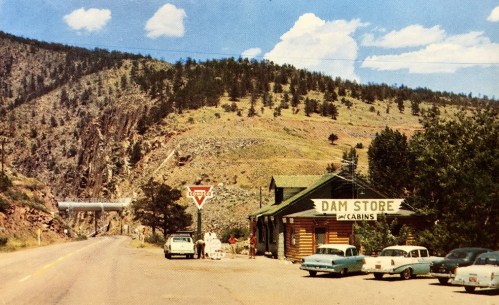
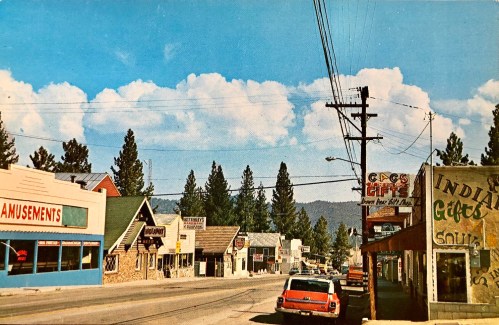
BigBearPCSml

Big Bear, CA

La Fierabrosa: A Lyndy Martinez Story, Part-12

Link to Part-1La Fierabrosa Part-1

Lyndy Life Tip #165: When exploring a desert ghost town on foot, never leave a plastic water jug unattended, especially if you spot a raven. They have a habit of poking a hole near the bottom edge, allowing all your water to escape, only to take a brief sip and bolt. 

The Spitfire flung her hat at the large black bird. “Hey, cut that out!” she shouted, violently shoeing him off. She could tell where he’d been pecking his sharp beak on her igloo cooler. He watched her with one beady eye, waiting until she was near striking distance, before nonchalantly spreading his wings and leaping from the roll bar. With two efficient flaps—graceful as a fairytale dragon—he was soaring high on a thermal.

She could hear his inner monologue: “Nice try, loser...”

Arriving at the Jeep, Lyndy rested her elbows atop the half-door, catching her breath. Evidently, she and corvus-corax were the only creatures loco enough to be active at the worst time of the day; no other feet on the ground, no wings in the air. All the rational species were sheltering underground in burrows, awaiting dusk. It was a tempting idea. And you know those creepy apocalypse movies where for some reason you’re the only human alive on earth but your hair still looks fabulous? This town was like that.

Lyndy gazed at the faded beer sign, perpetually twisting up and down in the wind. Then after five breaths, she slid the shaven-down key in the ignition slot, pushed in the clutch and set the Jeep in gear. Traveling northeast on Kelso-Cima road, her route paralleled the Union Pacific mainline.

In this world feelings of solitude don’t last forever. The Spitfire soon became aware of rumblings at her back, comparable to a herd of buffalo charging across a prairie. She turned her head to see. In the side mirror, above the warning about objects being closer than they appear, she spotted a train approaching, daytime running lamps marking the snout of the golden yellow locomotive. A shallow drainage ditch and copious amounts of rock ballast separated the steel rails from the paved roadbed.

Some people say 75 percent of the stuff they teach in school you’ll never use. But now for a question of physics and momentum: Could a little jeep outrun the goliath freight train—a diesel consist—weighing over half a million pounds? Lyndy shifted out of overdrive and floored it, just as the engineer yanked his mighty air horn.

They were battling the same foe: hot stagnant air, like running sprints with a sandwich board taped in front of your body. One vehicle harnessed a few thousand horsepower and the other perhaps 50—being optimistic; not nearly enough. That horn echoed like a trumpet from Revelations, almost as jarring to the eardrums.

Leaning forward, checking the speedo and the tach redline—she knew those two were a joke, yet she monitored them anyway. The trainman was surely taunting her, arms out the window, dipping a pin-striped hat in the air stream, flicking it up and down. Maybe he did it because he knew she was a pretty girl, or else he was bored and did this to everybody.

The Spitfire let her hair out, pitching the tie to the passenger floor. She ran her fingers through to make it wave like a flag in the wind.

If Chan or Lovelace would crack open the wallet a little, purchase a GT350, she would run away easily. Instead she was losing ground. That’s the way it goes some days. The train clattered on by, caboose gradually merging into the vanishing point. As the cacophony of railroad noise subsided, she could once again hear herself think, plus the din of an AM radio announcer. It was a live news broadcast, and the host was discussing a record breaking Southern California heat wave, warning people to stay indoors, check on elderly neighbors and so forth.

You don’t say?

The next dirt-crossing intersected a trail aiming to the mouth of Globe Canyon. It was one of her planned waypoints, and Lyndy engine braked. Cattle guards—essentially rusty metal grates—had been positioned on both sides to prevent wandering cows from turning into train kabobs. Lyndy rolled across the tracks, pausing on the far side to take her bearings. The map indicated actively used JBR corrals, and a spring or guzzler up slope from here.

Reaching behind the passenger seat, Lyndy tilted the lid and dipped her fingers in the plastic ice chest. The ice inside was already turning to slush water. She fished for a slippery can of pop, not knowing which container was which, but expecting Tab cola. Beholding the prize, she discovered it was grape soda, a leftover of some long-forgotten camping trip.

Grape? Seriously, what sober individual buys grape soda?

She stared at it, pondering whether she was really thirsty enough to swallow a grape flavored soft drink, and questioning her decision-making ability in all areas of life. Something about it tasted so much like purple cough medicine. She ran the moist exterior over her flush cheeks and forehead. Then she hopped to the stable ground.

Pointing the lid well away from her midsection, Lyndy tore off the foil tab. The pressurized contents ejected a fountain of foam, like cheap champagne. Then she raised it to her lips. Liquid infused with too many air bubbles ran down her chin as she gulped as much as possible. It smelled like pure cane sugar.

Lyndy Life Tip #164: No matter how handsome or charming, never date a guy who collects antique train whistles. Personal experience.

When the can was finished Lyndy crushed it with her boot heel. A lone honey bee was fast hovering over the muddy ground, giddy with excitement. She wiped her forearm across her lips, then sought out a clean rag to do a better job; she didn’t want to be sticky all afternoon.

The Spitfire set her arms and elbows across the rear fender, this time lowering her head and kicking at the soft dirt. The tips of her black hair dangled across her chest. Every so often she could hear the train faintly, a squeaking of steel against rail, receding in the distance.

That relatively cool night in Amboy had given false hope for relief, yet was simply an intermission. Already she could feel a headache coming on, beginning as a tightness around the temples. It was likely the first indication of heat stroke. But if she had to give this headache a name, it would be Dale Keynes. What a cad.

Like her pal the raven, it was routine for him to take advantage of any vulnerable situation. The worst: when she was nineteen, naively she’d informed the whole town—at least everybody at the Vanishing Point on a Thursday night—of their intentions to wed. I mean sure, they had talked about it.

The sting of embarrassment was evergreen, still making it difficult to breath whenever the memory crossed her mind. You know how small towns get. And then he comes back from Nevada married to Miranda. He’d taken her pride and smashed it to smithereens. Lyndy was so ashamed she could barely leave the house. Rather than show her face, she’d drive to Victorville or points west to buy groceries and avoid everybody. Maybe that was when she started resenting Catherine. The reason? Cathy had never made a fool of herself in the same way The Spitfire did.

Lyndy reached for the wrinkled map. She set her finger upon the circles marking wells at Government Holes. It wasn’t going to be easy informing Chan of her failures. She’d wasted a week of time with no result.

Speaking of the elderly, somebody should check on that crazy sweater lady. She probably had a house full of cats and no AC.

Lyndy shook her head. “Somehow, I manage to achieve new lows in career and love life simultaneously,” she muttered, glancing at her dusty boots.

Then she spotted tire marks, deep and crisp. Some other fool had been here—exactly the same spot—even stopped.

Wait, wait, wait. In this weather? Somebody else had been here … today?

Folding it in half, she threw the map back on the passenger seat. There hadn’t been another car since before Granite Pass.

Lyndy circled around the Jeep, head pointed down, hands in her back pockets, eyes studying every inch of the lines. She lowered to a crouch, resting on her heals. With just the nail of her finger she touched the highest points, places where a tread void had rolled. The tracks were firm, created by a heavy vehicle that was also wider than normal. From this angle she could see and compare to the maroon Jeep. Separation between wheel centers was so broad it dwarfed the Jeep’s axles, greater than any she could recall from a civilian truck.

But the most striking feature was a common sense rule the owner failed to obey: he or she wasn’t running the same make of tire on all four wheels. At first, Lyndy assumed they’d been pulling a trailer, but no. Two on the left were matching, but the third and fourth, while being equivalent width, were completely different tread.

The pattern ran both directions, into and out of Globe Canyon.

What kind of Frankenstein car is this? Somebody own a dump truck around here?

Lyndy placed a finger on her chin and squinted at the sun. About the only thing rascal Dale had mentioned about Government Holes was the lack of any recognizable patterns, due to heavy rains.

Reaching in the cargo bed for the tools, The Spitfire retrieved a coiled cloth tape measure. She stretched it over the marks in the road, bending down to keep it tight. Once black numbers were so faded you could only read every other digit. But it worked: 79 inches edge to edge.

Next, Lyndy went for her camera. Shaking it from its leather case under the passenger seat, she walked a suitable distance to frame a better picture. As she did this she configured the aperture for exceptionally bright conditions.

Once upon a time in the west, you could track a person by his or her boot print, or the gate of their horse. Nowadays, well, you had to make-do.

Knowing these shots might come in handy, Lyndy took several snaps, then stowed the camera. Taking one last look around, she combed the horizon for wisps of dust, possibly indicating trucks on dirt roads. None were present, not even a whirlwind. She decided it was time to get a move on.

It made logical sense for tourists to want to visit the iconic Mojave. It was known around the globe, enjoying particular acclaim in Europe. But when the radio is squawking about record breaking heat waves, who the hell wants to suffer out here versus relaxing indoors at some posh Vegas casino? The whole week had been like that: quiet. Plus, what sucker rents a car with non-matching tires?

I gotta find that vehicle,” thought Lyndy, accelerating onto the pavement.


20 minutes later …

Ten miles deeper in, at an intersection with Cedar Canyon Road, Lyndy pulled to the side. Conditions were getting worse. She left the engine idling so the mechanical fan would spin and pump continue circulating water. There hadn’t been any motorists along the previous stretch. Not surprising.

Her thighs were sticking to the seats. They made that burping noise as she slid out to survey the land, her headache becoming more and more intense. The Spitfire cupped a hand over her eyes to shield from glare. With the other arm she braced on the windshield support pillar. Hallucinations would be next.

According to AAA, there ought to be direct access to the Mojave Road from here, but it required locating hundred-year-old wagon ruts comprising what remained of the trail. Not an easy task.

After all this, Mr. Crawford better not skip town or something.

She reached for the pack of cigarettes and cheap lighter. With the plastic bic she touched one Newport to flame, but could have pressed it to the pavement with the same result. Gripping it between two knuckles she trekked across the road.

Even the county-maintained road was in deplorable condition. Its charcoal gray surface crumbled beneath the soles of her shoes, each gap drowned in about 5 layers of tar, and filled in with blowing sand. On the far side was a dry watercourse. Where the drainage had been spanned by a barbed wire fence, intermittent runoff flowed at a westward slanting angle, 30 degrees to the road.

Near to this ephemeral stream, a primitive scrap wire and wood gate caught her attention. It was part of the fence line for the cattle range. The closure mechanism was simply a loop of wire—thick as a coat hanger—stretched over top of a sturdy post. At the base of the post, a hearty nolina plant had taken root.

Lyndy had to wrestle the wire gate, using her shoulder to reduce tension. Then she pried it loose with her fingertips, scuffing up carefully painted nails in the process. The crude gate collapsed in a heap on the ground, defeated. She felt ready to do the same.

But there were narrow ruts here, and protruding in the gaps, fragments of rusty iron, parts of horseshoes left behind by mules a hundred years ago.

This then, must be the road in question—Russ’s road. Lyndy crushed out her cigarette. Then she saw tire marks, same as before. She knelt down for a closer inspection. Indeed, whomever had been at Globe Canyon, had also passed this way, except only one time. They were traveling west, into the range.

Hastily returning to the jeep, she gave each of her front hubs a quarter turn, setting them to the “lock” position. From the stretch she could see, and what Russ had described, driving the Mojave Road would be like riding one of those 15-cent kiddie rides outside a supermarket, except twice the number of jolts and never ending.

She muscled the transfer case into low range.

Who needs a gym workout when you drive a CJ-5?

There were rules of etiquette in backcountry travel. Nothing could be more irritating to a rancher than a gate left open by careless off-roaders. So, it was interesting then, that the driver of the Frankenstein car had enough sense to force the gate back on. They paid no attention to tire safety but cared enough to practice the cattle rancher’s code. She was even more determined to visit the JBR, first to check every one of their vehicles. Somehow, she knew ahead of time none would match.

Westward ho. After rolling through the gate, Lyndy stopped briefly to secure it. If the map were to be believed, this segment should connect to Marl Springs, an oasis with plentiful water and animal guzzlers. But it was a long haul, ten or more miles.

Despite the comically slow pace, crawling in low range four-wheel-drive was pleasing to the human soul. The surface was so uneven anyway, it would be impossible to travel at any normal speed in two-wheel-drive. First you were listing at 25 degrees to the right, giving an unnerving feeling you might tip over with the leaf-sprung suspension. Then a hundred feet more you were tilted 25 degrees the opposite way, and the cycle kept repeating itself. Occasionally you were nose down at the same angle.

“I seriously need a massage after this,” The Spitfire whispered.

In the span of a handful of miles, the desert transformed itself. Unexpectedly she was engulfed by a forest of mature Joshua trees. Their shaggy limbs hung across the road like ancient oaks in the south.

Despite cartoon depictions, it was often said of saguaro cacti that you’d never find two individuals even remotely alike. The same could be said of Joshua trees, and that was the remarkable thing about them. The plants twisted overhead like art sculptures. Some were in full bloom, adding an aroma of pollen in the air. The dagger-like green leaves were tender, but near impossible to access given the texture of the trunk.

It could have been fun being out here, pretending you were pulled by a team of ornery mules, riding in a covered wagon. That is, if her entire brain wasn’t throbbing.

Up ahead the road dipped in a sandy wash. New openness created by the wash provided a view to the mountains. Lyndy noted towering cumulous starting to rocket up. The white cotton forms contrasted sharply with blue sky. High humidity, combined with triple digit temps were a recipe for storms. The troposphere had limit switches; it could only get so hot before something had to give.

To keep up momentum, Lyndy doubled her speed. She didn’t dare risk getting stuck until she was safely to the other side of the wash.

Out in front there was some unidentified life form coming into view, strange black masses moving horizontally on the alluvial plain. They were cows with watermelon shaped bodies and bulbous heads, appearing to hover over the ground. The skinny toothpick legs of cattle were completely blurred by heat waves.

The Rawhide television theme intruded into her mind: Don’t try to understand em, just rope, throw and brand em… sage advice.

Cresting a small rise—remains of a fossil sand bar in the watercourse—she came upon additional cows. These were standing in the road. Her reflexes taxed, The Spitfire could hardly react quick enough, slamming on drum brakes to avoid plowing into the nearest one. The Jeep went into a slide, coming to rest with fender twelve inches away. The startled beast let out a distressed moo, causing the rest of the herd to scatter into the brush.

“Running into one of those behemoths would have been bad ugly,” thought Lyndy.

But when she eased the shifter back into gear and tried to drive forward, her tires began to spin. Lyndy attempted to compensate by revving the engine higher, but it was no use. She threw it into reverse, but it wouldn’t go backward either. In the soft soil, all-terrain tires were no bueno. Everything she tried only made things worse.

Lyndy craned her neck to the side. Looking at the rear axle, her heart sank. It was buried up to the diff case. She smacked her palms three times against the wheel. Lyndy still hadn’t purchased a CB radio.

In hindsight, she should have left a note, or mentioned to Chan where she was going. She’d told no one of her plan, and was on one of the least traveled, loneliest stretches of trail in the desert. This wasn’t a game anymore.

Crapola.”

Lyndy reached in the igloo cooler for a sandwich; they were floating on the surface now, probably soaked. Meanwhile she eyed the green army shovel. It had been strapped to the roll cage ever since she could remember. Hector had needed it once or twice, probably to get out of the same situation. But never had The Spitfire dug herself loose; she was the pretty one. She was the charming one. And that was the worst thing about Hector’s passing—she had to do the digging by herself. But wasn’t it the same thing Chan complained about? He had to be the bounty hunter now and she was the private investigator. It took both of them to replace the first Martinez.

“You know, if I die out here, I’m coming back as a ghost and totally going to haunt the shit out of Ted Crawford.”


La Fierabrosa Part-11

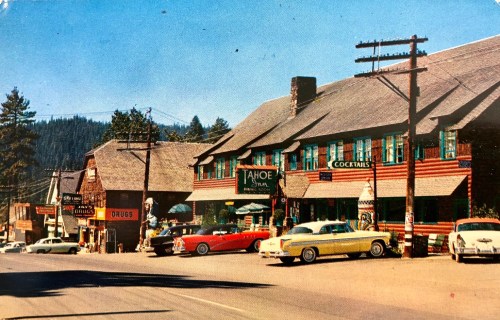
TahoeCitySml

Tahoe City, California (1960’s)

La Fierabrosa: A Lyndy Martinez Story, Part-11

Link to Part-1La Fierabrosa Part-1

Dale stuck out his palm, softly pressing it to her midsection. With a smooth but forceful motion, he backed Lyndy up, asserting his way further into the Airstream trailer. He hung up his cowboy hat on a peg by the door.

All the males in my county have lost their damn minds,” thought Lyndy.

As the door closer shut automatically, he latched it behind.

“You shouldn’t be in here,” said Lyndy.

“Miranda thinks I’m working late,” he replied.

Years had elapsed since he’d laid a heavy hand on her body. Deep inside, she missed that blissful feeling. It was the only reason she hadn’t punched him in the nose.

He began unbuttoning his shirt.

“Hey, I apologize,” said The Spitfire. “You must have got me confused with somebody else. I ain’t never been a homewrecker.”

He paused and looked up.

“I leave that job to folks like Catherine,” she added.

Why she chose to throw Cathy Cookson under the bus, Lyndy wasn’t sure.

Dale inhaled suddenly, then slapped a hand against the doorframe. “Dammit. You used to be different.” His breathing was audible.

Lyndy nodded. “Perhaps you’re right.” She exhaled, calmly taking a seat at the table. She needed to be off her wobbly ankles, lest they give out. She took a moment to adjust the top of her robe, so it thoroughly covered any bare skin below the neck.

“So, I had a friendly chat with our buddy Wallach,” declared Dale.

Lyndy frowned. “What do you mean by that?”

“I called him up—asked him if he knew where Evan Stone was holed up.”

“Why would he bother telling the truth?”

“Because I also told him where and when to meet me in plain clothes.”

Lyndy sniffed, eyes downcast, fingers tracing wavy lines in the pattern of the Formica table. “He won’t fight fair you know,” she warned. “He’ll probably bring his brain-dead pals to back him up.”

“Doesn’t matter who he brings,” said Dale, placing a hand flat on the table, inches from her fingers. Each of his knuckles were badly scarred, from prior bare-fisted boxing matches.

Lyndy shook her head. “I’m sad to say, eventually it will matter. You have two kids now. There are many more of those guys than there are of us—even counting the bounty hunter—and he pretty much counts double. That’s exactly why I backed down today.” Under the table she crossed her legs.

Lyndy reached for the pack of Newports. She shook two out, passing the extra cig to Dale. Then she stuck the first one in her lips, raising the lighter to it. Once lit, she flicked the lighter like a skipping stone, landing topside in her purse.

“I ain’t sure why I backed down. It’s not like me,” whispered Lyndy. “I guess I chickened out. I was thinking of my brother—the way he died alone.”

After a few puffs, Dale added, “Wallach told me Evan knew of a remote hunter’s cabin, way out in east county, not shown on any maps. He’s self-sufficient there for weeks, and he won’t come out until the charges are dropped. Wallach claimed he’d never been there.”

Less than half a day, and the story had changed. She still didn’t believe it.

Lyndy felt ready to speak again. “Alright, remember two things: Number one, you cannot keep fighting battles for me. I swear to god you are gonna get us both killed. Second, and most important, you are the one who had a decision to make. You chose Miranda over me and I still don’t know why. But it was your call who to marry, and you have to live with the consequences. I’ve already accepted it. You sure as hell can’t have the both of us. What will it take for you to understand?”

Dale had a really ticked expression.

Lyndy rested her forehead in her hands. “I would have changed for you. I would have been a good wife.” She didn’t know why she threw that stuff in. It was probably a lie. The Spitfire knew she could not have changed for anyone, let alone Dale.

“I can’t stop my feelings for you,” replied Dale.

“Well maybe you ought to try hypnotism. I hear those dudes can cure you of anything,” she said sarcastically.


Next morning …

Birds were chirping. The Spitfire opened her eyes partway. Judging by the light flooding her bedroom, she’d slept in. But at least she felt rested. She pinched at the motheaten curtain pleats, raising them an inch to see out. The foothills were bathed in a golden yellow.

Lyndy turned back to the ceiling, placing a hand under her head for support. Sure, there were advantages to being single. You get to hog the exact middle of the bed, and stretch out. Nobody tells you when to get up. Plenty of time to focus on one’s career aspirations—so many opportunities—and … and … who the hell are we kidding? Being alone is awful. She closed her eyes.

Time to get serious, chica. Get up.

Rolling out of bed sideways, Lyndy stumbled to the drip coffee maker. Along the way she collected items of clothing: a faded pair of denim shorts she had to squeeze her hips into, a comfy bra despite underwire, a lightweight cotton cowgirl shirt with pearly buttons. And at the table, she re-laced her favorite hiking boots, in case she needed to traverse large distances on foot. Her faith in AMC product dependability—what little remained—was shaken to the core.

Lyndy Life Tip #158: Unless you live in a Brady Bunch household, get a four or five cup coffee maker. Who the hell needs 12 cups of coffee in the morning? It’s a waste.

Meanwhile, The Spitfire hatched a new, better plan. Something had been bugging her ever since Ted Crawford stopped in at Roy’s Cafe, and it had nothing to do with Evan Stone. Wouldn’t it be sexist to assume a female wasn’t as capable as a man at cattle rustling? There were numerous red flags surrounding her Good-Samaritan image. Julia Russell had the hardened appearance, and practical skillset, of an individual who knew their way around ranching and cows. Suspicion was warranted.

Working this case somehow seemed more pleasant anyway—too bad she couldn’t bill Lovelace for it. Cattle rustling was a good old fashioned western crime. Nobody was going to threaten to disfigure her face or drag her behind a horse—that only happened in cheesy action movies. She could avoid contact with crazy people like Dale Keynes and Kyle, and it would allow her time to ponder how to peacefully resolve Chan’s case. As a bonus, there might be opportunities to accidently “bump into” the cowboy Ted, particularly if her route of travel took her anywhere near the JBR.

While waiting for coffee to brew, Lyndy unfurled the county map, spreading it over the double bed. Daylight revealed faint blue dashes tracing out the ephemeral courses of the namesake Mojave River, dotted outlines marking dry lakebeds, and the no man’s land of sand dunes. The crisp folded edges crinkled under the weight of her fingers and thumb.

The East Mojave was an ideal stomping ground to play T. E. Lawrence. The I-15 and I-40 freeways formed a tilted V shape, the double end opening to the borderline. This wedge contained vast wilderness sprinkled with abandoned mines, rock forts, ghost towns and other archaeological sites; a last bastion of the wild west oddly positioned in rural California.

Included were a lifetime’s supply of dirt roads waiting to be explored. Some of those trails were on BLM sanctioned grazing land, others part of a network of stock ranches including Kessler Springs, the OX and the JBR. The possibilities were endless.

Good news was, Julia Russell had provided several clues to her whereabouts. The Old Mojave Road connected a series of natural seeps and watering holes, stretching horizontally from the Colorado River wetlands, through the middle of the wedge, to the Mojave River crossing itself at Afton Canyon near Barstow.

Because it traversed several high mountain ranges, The Mojave Road was by no means an efficient passage, but without adequate sources of clean water each night, your pack animals were going to die anyway. Knowing this, modern ranchers had developed additional water sources for their cattle, informally called guzzlers.

Resting on her stomach, Lyndy tucked a number two pencil behind her ear and charted a course that would take her through or near all the major points Russ had mentioned. A few of the names she recalled were Marl Springs, Cedar Canyon, Rock Spring and Fort Piute. The proposed route would also take her to Government Holes, where some of the cows went missing, and Lanfair Valley, where presumably a large truck could have driven them out.

Chan never called and that was a good thing—must have forgotten to pay his phone bill. The other thing that happened, she didn’t even want to contemplate yet.


Minutes later …

Under the protective shelter of a paloverde tree, Lyndy loaded her SLR camera with iso 64 color film. She exercised the advance lever repeatedly until she was certain the take-up spool had engaged. Next, she hosed dust off the neglected igloo cooler, and filled it to the brim with crushed ice.

Lyndy shook and punched at the lid of Hector’s old Dodger ball cap until it resembled a hemisphere, then flipped it on her head using the bill. This was a day to be practical. No time for monkey business.


Using a bowie knife, Lyndy began smearing natural peanut butter and strawberry jam onto slices of plain white bread—the finest available at the gas station c-store. She wrapped her culinary creations in layers of tinfoil, placing them atop the ice in the cooler. What kind of nut-job enjoys a warm PB&J? She also tossed in some extra cans of soda.

Back in town, Lyndy topped off her fuel tank, pocketed the receipt, and headed east on Route-66, to the first junction with Kelbaker Road. Cruising at near fifty miles an hour, the morning air was energizing. She switched on the do-nothing factory radio, and though struggling for reception, could faintly hear a song she recognized. At knee level, it felt like the heater was stuck on. Adjusting the knobs made no noticeable difference—perhaps they weren’t connected—and with all the other air movement it didn’t seem to matter.

Lyndy submitted a radio request via ESP. Humming along to the music, filling in parts of songs that weren’t audible, she didn’t pass a single other motorist until she made the turn onto Kelbaker Road. Shortly thereafter, she passed a man in a non-descript Carry-All heading the other direction.

Approaching the interstate from the south, Lyndy was treated to a panoramic view of the Granite Mountains. They were among the tallest and most rugged peaks in the desert. Spires of solid granite, like the buttresses of a cathedral fronting the range, with no foothills to speak of. The rocks themselves had a pinkish tint, rather than the cool grey of Yosemite’s famous walls. The highest points, Granite and Silver peaks, hosted island forest of juniper and pinyon pine. They often received snowfall in the winter.

The surrounding landscape was changing fast. Unlike Amboy, where land was low and prairie-like, this place had a high desert feel, with greater variety of flora. One could smell the differences in the air. Notable were the Mojave yucca, still in bloom.

Reaching far side of the I-40 undercut, Lyndy crossed paths with two additional vehicles; first was a Jeep, this one a pretty shade of cobalt blue. Lyndy received a traditional Jeeper’s salute from the driver. She responded hastily with a quick wave. Were it not for that person snapping her out of a daydream, she would never have noticed the second car.

It was a Ford Galaxie station wagon, tan in color, and behind the wheel sat a familiar character. Lyndy did a double take. It was the older woman Lyndy had seen in Barstow on numerous occasions, otherwise known as “sweater lady”. Both her hands were squeezing tight to the steering wheel as if she were on a Big Dipper roller coaster, about to crest the largest hill. She was leaning forward so much her old lady scarf or shawl—whatever that thing was called—was practically touching the crooked visor on the windshield. And yep, still a trademark ugly brown sweater to complete her ensemble. The side vents were cracked outward, but the main windows were all rolled up tight. Yikes! Did she have functioning air? Without that, it would have been like riding around in the tropical punishment box from Bridge on the River Kwai.

And what would an encounter with the sweater lady be without a scornful glance and the same evil eye, unprovoked of course? This woman embodied the “drive angry” mantra.

Wait, the sweater lady has a car?

Lyndy took her foot off the gas, decelerating to watch closely where the car went in her rear view. As expected, the woman turned westward, entering the ramp for I-40. That meant she was returning in the direction of Barstow.

Lyndy couldn’t imagine a more fitting ride for her, replete with sloppy Earl Scheib style re-paint, cause originally that land-boat came factory two-tone. Lyndy whispered aloud: “But if she actually owns a vehicle, why the hell is she walking all the time?”

After miles of steady incline, Lyndy crested the summit of Granite Pass, and was rewarded with a scene out of a western movie. Visibility was superb. In the valley below sat a miniature Saharan landscape called Kelso Dunes. Adjacent was the fancifully named Devil’s Playground. Both were a product of the Mojave River, changing courses and generating shifting sand over millennia. Sometimes it was fun to hike out there. Except with the high-pressure system unabated, it was sure to be another blistering and windy day, making the dunes not at all inviting.

Something encouraging was beginning to stir in The Spitfire’s soul. She was starting to gain back the feeling she loved most about the desert: a sense of tranquility and freedom. Hector had once said, “It may be an acquired taste, but the desert works its way down in your soul. One day you decide you don’t dislike the dry open spaces—you actually start to miss them. That’s when you know you’ll never leave this place.”


Lyndy chugged on to the intersection with Kelso-Cima Road, in the tiny whistle-stop town of Kelso. Kelso was roughly the same size as Amboy, but in a competition for which town could disappear off the map sooner, Kelso was leading the charge.

By far its most prominent feature was a majestic 1920’s train depot, done in a lavish mission style of early California. In the bygone era of steam this had been a crucial resting point, where crew and passengers alike could take a hot meal, play some card games, or even sleep in a normal bed.

Though it must have been romantic in its heyday, modern Kelso was a real dump—comparable to a thirties dust-bowl adventure park. No TV signal even reached the town. So, by one measure of civilization, in Amboy you could watch Johnny Carson, but in Kelso forget about it. That all assumed you even owned a television.

Near the depot, a rusting away sign, flapping and squeaking on a metal post, advertised a six-pack of Schlitz beer at 29 cents.

“Sheesh! What a killer deal,” thought Lyndy. “It’s like 5 cents per can.”

No motorists were coming either direction.

The Spitfire couldn’t help herself. Emboldened by curiosity, Lyndy parked the jeep adjacent to the decaying wooden saloon. A single pane window, having become near opaque from decades of sandblasting, was still her best option for seeing inside.

Lyndy opened her car door. Stepping out onto the sand, she post-holed her way to the window. Knotholes in the pine-board roof allowed shafts of light to illuminate the room, but to see anything with clarity, she had to wipe a circle using her elbow and bunched up sleeve. It was good enough she could cup her hands and peer inside. The room was mostly cleared out, with half a dozen spider webs dangling from the rafters. Anything which could be strapped to a model T Ford, or even the back of a tired mule, had been hauled off to the next boom town; all except for a decrepit pool table. It was a common sight, as very few settlers had the wherewithal to move a pool table when pulling up stakes in a hurry.

“Man, I bet that old thing could tell some stories,” pondered Lyndy. “Wyatt Earp himself might have knocked a few balls around it.” She levered off one of her boots, needing to exercise the arch of her foot, and at the same time discard some sand.


Meanwhile in San Bernardino …

Matt Wallach was busy polishing his fifty-year-old bar top, when he heard the door hinges creak, and the click of boots.

Being too early for any customers, he had a sinking feeling. His war buddies were still at home, sleeping off hangovers from the previous night.

Without having to look he knew it was the deputy, the one asking about Evan, and who protected The Spitfire.

He continued mindlessly with circular motions on quarter-sawn oak, using the soft rag, but his attention was fully on how to survive this encounter.

“Can I get you something, pal?” he offered, a touch of humor in his voice.

There was no answer from the huge cop. Matt gave him a sideways glance. He could see brown leather gloves covering both his fists. The cold, unfeeling stare on his face was the same the guards had prior to a beat down. This young man wasn’t here to “check on him”.

Wallach chuckled nervously.

“I uh, heard you were some kinda bare-knuckle fighter in Saigon. I myself am a veteran. Never got a chance to see you there, but I knowed some folks used to bet against you.”

No answer, but he knew the cop was observing him in silence.

“I suppose they wanted to see an American officer get his ass whupped by a local boy.” Wallach was thinking about his pistol, and whether he could get to it faster than that cop could get to him. “This one time, was a champion martial arts expert come to town. He was about twenty-five years old, and obviously pretty cocky. He was Chinese I think. His wife or girlfriend was there in attendance, and part of his family. That fool was supposed to put you in your place—like one of them Kung Fu TV episodes.” Wallach suddenly felt his throat getting dry. “Carson—he’s my regular bartender, usually stands right here—told me that was the first time he’d witnessed a shunning after a match.”

“Look Wallach, your friends are idiots, but you knew that,” said Dale Keynes. “I just hope you enjoy fruit smoothies, cause that’s the only thing you’ll be eating for the next six weeks.”

A deep feeling of regret was steadily chipping away at Wallach’s state of mind. His pride may have cost him teeth, and he would not be able to help Evan after this.

La Fierabrosa Part-10

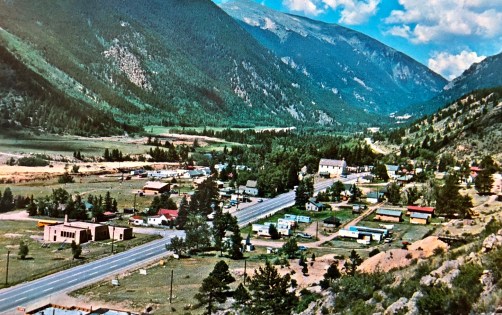
IdyllwildSml

Idyllwild, CA and Taquitz Rock

La Fierabrosa: A Lyndy Martinez Story, Part-10

Link to Part-1La Fierabrosa Part-1

“Ted? Do you mean Ted Crawford? The little delinquent.” Dale shook his head. “Not a chance. He’s got a major attitude problem, but I don’t think he’s that devious.”

The Spitfire raised an eyebrow skeptically; she was thinking back to Monday night. His account of the bashful JBR cowboy defied all personal experience. If anyone had an attitude, it was Dale Keynes. But Lyndy kept her opinion to herself. “That little delinquent is a year younger than me. He’s twenty-five Dale.”

“Fine. Good point.” Dale, tapped his fingers on the edge of the desk and yawned, the metal from his wedding ring making a clinking noise. “All you desert rats are growing up fast. This is seriously depressing.”

“Join the club,” replied Lyndy, with a tilt of the head.

At least she confirmed Ted wasn’t a prime suspect. Lyndy wanted to ask additional questions, but they were interrupted by the sound of clicking cowboy boots on the hard floor. Then someone banged on Dale’s door. Lyndy prepared to leave.

“Just a minute,” said Dale, as he checked his watch. “Hey, what are you doing the rest of the day?” he whispered.

“Uh, laundry I think.” Lyndy straightened the inch-high stack of papers documenting Wallach’s criminal record, shoving them back in the folder. Pushing her hair out of her face, she added, “But first I’ve got another lead I want to check out, and then I’m pretty sure Chan is gonna ring my phone about one million times until I finally pick-up; he’ll want a status report. Another thrilling night for me.” Lyndy stood up. She fixed her hair, putting it back in a ponytail.

The door burst open, having been punched or kicked. Standing in the entry was Sheriff Jackson, frowning like his hound dog had been run over. One hand was shoved in his pocket.

Dale immediately sat down in his chair, the correct way, and started rearranging papers on his desk. “Nice of you to drop by Lyn. I’ll give Wallach’s parole agent a heads up. Good luck with your laundry,” he said, in a boy scout chipper sort of voice.

“Howdy,” said Lyndy to Sheriff Jackson.

In answer, Granville simply pointed toward the front and recited, “Bail enforcement agents, private dicks, people who watch too many police dramas and all employees of Chan’s Bail Bonds are prohibited from back offices.” His facial expression was stale.

It wasn’t worth correcting him that technically speaking, she was under contract from The Lovelace Corporation, not Chan’s.

“But me and Dale are long-time friends?”

“Don’t care. It’s a police station, not a slumber party. Happy trails Miss Martinez,” said Granville, with a tip of his hat.

“I’m movin. I’m movin,” grumbled Lyndy.


45 minutes later …

Judging by the size and girth of her abdomen, Lorraine Hobbs was six or more months pregnant. When Lyndy found her, she was pacing her yard in a yellow house dress, using a bowie knife to flick bits of collared green at her pet iguanas. The two lizards were attentive as any small dog, sniffing the air with their tongues, and munching on the crunchy leaves. Every place Lorraine moved the two of them wiggled after. And for some reason the sound of a dog eating food was tolerable, but the hideous sound of those iguanas chomping was like wine glasses spinning in a garbage disposal.

Pretty much a normal citizen for the Mojave Desert.

Nearby, Lorraine’s three-year-old son—Lyndy assumed he was her son—was busy playing Lone Ranger, reciting, “Bang! Bang!” every fifteen seconds. He had on a cowboy hat, a denim shirt and silver cap gun with plastic holster, but no pants. He even pretended to shoot his cap gun at Lyndy’s jeep as she bounced up the driveway, shouting, “Comanches!”.

It was Tammy Ward who mentioned her second cousin lived in Phelan, and was a former cocktail waitress at Cadillac’s. Lyndy had seen her fair share of pop-up goldrush towns, but this place was ridiculous. The AAA map became hopelessly obsolete. Gravel roads zig-zagged throughout the community, adjoining at random angles, seeming to follow the whims of an inebriated bulldozer operator, rather than adhere to a master plan. Lorraine’s home was a glorified cabin, lifted and balanced on a raised foundation, set back from the road and shaded by a stand of dry oak trees.

Lyndy casually let her eyes wander. Lorraine’s upper arms exhibited some puzzling tattoos. Was there a mister Hobbs hiding somewhere, or was she a single mother? Lyndy felt it would be impolite to inquire. Not to imply Lorraine even needed a man in her life. She seemed to be doing just fine on her own.

To hear Lorraine explain it, Evan Stone had treated everyone like a gentleman—we’re talking Victorian style. She remembered him fondly, having been a charismatic singer in an upstart rock band; same story Chan had told. And she added that she couldn’t recall any of the other girls making negative remarks about him either. Lorraine believed the charges against him were false.

So then, why run?

Instead of adding clarity, the more she learned about Evan, the more troubling and deeper her confusion. By all accounts he was an everyday criminal. A bit of a swindler perhaps, and nothing more.

Facing facts, Lorraine had been a waitress at a disreputable nightclub, and so there was reason to suspect her recollection and what constituted a “nice guy” was mis-calibrated. But how off could it be? Even a so-called lady of the night knows what a kind man is.

After ten minutes, Lyndy handed Lorraine a $20-dollar bill for her time, and left.  She knew it would be unproductive to continue the interview.

Lyndy Life Tip #156: Never, ever make the mistake of buying a wallet with Velcro closure. That repetitious sound will drive you insane.


Later that evening …

The once bold white stripes marking the crosswalks had all turned to dust, and blown away. Since passenger trains ceased making regular stops in Amboy, let alone buses, there was no need to restore them. There wasn’t even a car in sight for miles; just the rabbits and coyotes. Biggest danger on the road was spraining an ankle falling in one of many potholes.

While traversing the two-lane highway on foot, a cold wind sent Lyndy’s dark hair flying, and ruffled her skirt. Being chilled was an unfamiliar sensation, the first time in many days she’d experienced it. Goosebumps set the skinny hairs on her arms standing on end, and for a moment, her body was confused. Are we cold or are we hot?

At the motel, she had a remaining load of laundry in the coin-op dryer. Lyndy was mostly killing time, clutching a week’s contents of her post office box—mostly junk mail and fashion catalogs—under one arm. Had she been feeling ambitious, she would have taken her favorite clothes to the much larger laundromats in Barstow; they had newer machines.

Lyndy breathed deep and exhaled deliberately, savoring the tranquility of open space. Shades of indigo swept across the landscape. Along the western horizon, an awe-inspiring scene like an oil painting: the atmosphere transitioning through a palette of purples, blues, and finally hues of fiery orange near where the sun had gone down. Small business jets streaked over the mountaintops, glittering silently, en-route to cities like Vegas or Phoenix.

As a protective covering, the troposphere is largely underrated. Scientists say without it, you’d need a space suit.

Of course, Chan would be expecting an update, with substantive progress. She had only generalities to offer. Evan was sucked into the Mojave equivalent of the Bermuda Triangle, along with Ted’s missing range cattle, and about 10 other dudes having mugshots on the wall of shame.


In the darkness Lyndy navigated her mile-long dirt driveway, all the way up to the silver airstream. She drove slow on purpose, minimizing the chances of running over a tortoise, or any other creature sleeping in the road.

When she arrived, Lyndy could see a white envelope had been taped to the screen door. Inside was an embossed invitation to the river party. Todd must have dropped by earlier in the afternoon. He signed it T.P., and handwrote: “Hope you can make it!

The Spitfire smiled to herself as she pulled open the main door, setting aside her basket of laundry, unfolded. Hopping up the stairs she maneuvered to the kitchen.

She hadn’t expected much, knowing the pantry would be lacking. What could one prepare with two cans of pinto beans, one can of olives, and a box of corn puffs? Betty Crocker didn’t have a recipe for that.

Lyndy tore open the corner of the box and poured herself a bowl of cold cereal. It was a pitiful dinner, the signature meal of someone single and lonely. Afterward she took a hot shower, and spent time lounging on the steps in her bathrobe. She would have been inside, except it was still too hot to sleep. And lacking a television, she passed time listening to the AM radio. Reception came in waves, but improved significantly come nightfall—something to do with ions in the atmosphere. There was a certain theater of the mind effect that came with listening to far-off radio in some desert encampment.

Twisting the cap from a bottle of tequila, she poured herself a half-inch of reposado in a jar. Leaning back to take a sip, she shut her eyes. That’s when she heard the big iron motor. Her free hand went instinctively to the radio dial, lowering the volume by three clicks. She’d come to recognize the rumbling of cars approaching on the driveway. After listening to enough of them, you started to tell them apart. It definitely wasn’t a Cadillac, ruling out Chan. There was no denying it; this was an American truck. Not always true, but most trucks were driven by men.

“Crapola,” she mouthed. The Spitfire had nothing on underneath her pink bathrobe. She recapped the glass bottle.

Of all the things to be wearing!

Lyndy contemplated putting on clothes, but there wasn’t time. All that mattered was whether she could properly defend herself. She tied her robe tighter, squeezing through the screen door. She spotted her purse lying on the padded bench, at the kitchen table.

You know you’re a redneck when your kitchen table has one leg and two big hinges.

Reaching for it, she unsnapped the top flap and removed the black Beretta. It felt cold. There was one bullet in the chamber. She flicked off the safety, planning to manually lower the hammer.

By design the old silver mine didn’t receive many strangers; Hector liked it that way. Lyndy wasn’t so sure. One was just as vulnerable here as in town. Hell, Chan lived in town.

It was weird to be in a bathrobe, at the table, facing the door, with an unknown visitor approaching. It could still be a friendly face. She kept one hand under the table, the grip in the curl of her palm. If it was Ted Crawford, or Kyle Ellis, she could hastily stuff the gun back in her purse, and feign relaxation. Might also be Todd Parker.

She heard the engine cut off, then the sound of a man’s boots crunching on the outside gravel. He was tall. It could still be Todd.

The man tapped lightly on the aluminum screen.

After a pause, time enough for courage to build, Lyndy called out: “Who is it?”

No answer came at first. It was like the start of a bad joke. She could think of nothing else to say. Her fingers started to wrap around the grip. One could shoot through the door if need be. It was made of a flimsy metal. But why would a would-be assassin tap on the door?

“Hey, let me in Lyn” came the voice of Dale Keynes. For some reason it was the last person she had been expecting. Setting the Beretta aside—no reason to hide it—she jumped up and immediately opened the door.

He was still in uniform. For a moment they stood like mute statues, staring back at one another. Dale hadn’t been to the trailer in years, never this late at night, even when Hector was living. His earlier cheerfulness had all been erased.

“What the heck are you doing here?” she blurted out.

La Fierabrosa Part-9

29PalmsSml

La Fierabrosa: A Lyndy Martinez Story, Part-9

Link to Part-1La Fierabrosa Part-1

The Spitfire was in a bind.

Lyndy Life Tip #156: The trite phrase “it was a different time” can be used to justify anything outrageous or in poor taste. Example: “At a carnival I paid actual money to see a duck playing a xylophone … it was a different time.”  See how it works.

Of course, when it’s a Tuesday morning in San Bernardino County, and there’s a gun pointed at your chest, only because of a simple request that a bar owner take down their racist signage … well, it was a ….

His right arm was steady, at waist level, with a finger resting happily on the trigger and thumb on the hammer. Judging by his demeaner, it wasn’t a first for this lug nut.

The tall man continued speaking in an irritated fashion, “Let me explain some about the chrome plating process Miss Martinez. It involves highly corrosive chemicals, a lot of them. And I never know what to do with that shit when I’m finished. Disposing of acids legally in this state is expensive. Chemistry was never a strong suit, but I’ve often wondered what would happen if we held a person down and poured it on their face. What do you think that would feel like? Or, god forbid, if Evan’s little girl had a terrible accident around my shop. I would hate to see her grow up with that kind of scarring. I really couldn’t live with myself. You think a face like yours is unattractive now?”

Ever wonder what kind of dude drives a truck with those female silhouette mud flaps, in chrome?

Lyndy swallowed hard.

“God, if only he were a few feet closer, I could kick him directly in the nuts,” thought The Spitfire. But as much as she wanted the evil porcelain sign—to use it for target practice—she knew now was not the time. “Did he really just threaten a kid?” Best to cut the meeting short, then come back ready to kick ass at a later date.

The Spitfire cleared her throat, lest she squeak out a high-pitched reply. “Okey-doke, I suppose I’m gonna have to take your word for it … that ya’ll haven’t seen Evan Stone,” she announced, while inching her backside closer and closer to the door. “I’ll be leaving now…. probably won’t return. Got hearts to break elsewhere.”

“Do me a favor,” bellowed the man. “Give this message to Mr. Chan for me: Tell him Evan Stone went down to Ensenada to do some sport fishing. Sent us a postcard. And to lay off permanently. I don’t wanna see either one of you in my place of business. Pay attention to my damn signs next time. You ain’t welcome here. Neither are Chinese, the Indians, or anyone else who isn’t white. Got all that?” He shook his gun to drive home the point.

“Affirmative,” answered Lyndy. She held her empty hands high and backed out the door, pushing it open with her butt.

As she crossed the street the sun was blinding.

Lyndy crammed on sunglasses and fired up the Jeep, bump-shifting into gear. Good thing she’d gotten a new battery. Now would be the worst possible timing for a no-start.

The plastic steering wheel was searing hot; her fingers could tolerate it only a split second at a time. Lyndy constantly repositioned them like she was typing on a keyboard.

“Racist son-of-a-bitch,” she muttered, fuming under her breath.

Backing down from a fight felt infuriating. Could Chan’s no-show have been there all along, hiding in a back room? She had a strong suspicion.

Regardless, there was nothing to do but move on. Worst of all, the sign was still positioned in the window. Anybody who tried that in El Sereno would have gotten their tires slashed the same day, or worse.


An hour later ….

Lyndy Martinez observed a tiny shrike perform aerial acrobatics, swooping and diving among towering sandstone boulders at Mormon Rocks. She could tell what kind of bird it was by the silver head, and charcoal colored Zorro mask surrounding the eyes. Shrikes were feisty little creatures, known for skewering lizards on barbed wire fences. No joke.

Somewhere hidden in the scrubland was a nest, and a speckled egg. The Latin name for shrike means butcher. The mother would take on a mockingbird, jay or full-size raven in defense of her nest.

Lyndy let out a yawn. She could hear a rumbling sound, but the source was not clouds. Sunlight glinted off the cab window of an approaching diesel locomotive. A hundred yards beneath her Jeep passed twin iron rails of the Union Pacific main line. She was parked on a hidden dirt road, well away from traffic on the interstate. Dale had shown her this spot.

A smell of sage hung in the air, as did the smell of grilled meat and yellow cheese. The Spitfire peeled back the wax paper lining her cheeseburger, and took a big bite. Contrary to pop psychology, turns out one could fill a void in their life with greasy food. Lyndy scooted rearward, resting against the frame of the windshield, and placing one hand flat to brace herself. Crossing her tan legs, a glob of thousand island escaped the wrapper and plopped on her thigh. She dabbed at it with a paper napkin, but it was ineffective, only making her leg shinier. She’d probably smell like lunch the rest of the day.

At least the sky was blue again. But on the other hand, life was more depressing. Feeling positive about the future—that was for suckers. Her mission now was to survive, and as always, the best way to do that was to keep moving. Being still was deadly; the late victims of the shrike could attest to that.


As a child, Lyndy had ventured to places like Rosarito and San Carlos, accompanied by her Uncle Octavio. She remembered those trips as pleasant; they had the best hot chocolate. And Octavio was a true “people person”. He could chat up a complete stranger in town, and later that evening they’d be dining out on a rooftop terrace, at the stranger’s chicken ranch, treated like long-lost relatives. From what she’d been told, her bio-dad had the same qualities. He must have, to have charmed her mother the English teacher.

Unfortunately, herself and Hector hadn’t inherited such abilities.

“I bet Octavio was hoping to pawn me down there,” thought Lyndy.

At this point, the notion that Evan Stone actually escaped to Ensenada was seeming less and less believable. He was here, perhaps never having left his old neighborhood. His buddies were simply aiding him. It was a plausible theory. To make progress on the case, it was clear what had to happen next; she needed to drop in on her ex.


Back in Barstow ….

The multi-agency law enforcement complex where Deputy Keynes worked had two flourishing Joshua trees out front. Each topped twenty-feet in height. They were surrounded by coral pink rocks spread inches thick, in lieu of a lawn. Those trees were far older than the building, having been left in place during construction.

Lyndy quickly brushed her hair in the scant shade, removing some of the built-up tangles. She tilted her driver’s side mirror so she could re-apply mascara and lipstick, all while rehearsing what she was planning to say. Basically, she needed to establish a desire for help, but without asking him for help. And the hardest trick of all was to avoid Sheriff Jackson, Dale’s boss.

While most deputies didn’t seem to mind having occasional visitors around the station, Granville was averse. There wasn’t a private detective or bounty hunter he was known to tolerate, and he considered The Spitfire particularly offensive.

Upon opening the heavy front doors, Lyndy was hit by a rush of cold air from the blower. She could see the front desk operator, a green handset crammed between her ear and shoulder, typing furiously on the electric typewriter. Lyndy straightened her skirt and re-tucked in her blouse.

Low wooden dividers separated the lobby space from the back offices. Rather than seriously impede anyone aiming to do harm, it had been designed to keep the average Joe citizen corralled to the front. Lyndy waited impatiently for the clerk to acknowledge her, knowing there was a small button the girl could press to unlock the gate. A few seconds later the clerk glanced her way, giving a smile and quick nod. Lyndy knew to swing open the gate and let herself in.

The building had fake marble-pattern linoleum tiles and bad fluorescent lighting. On the walls were scuff marks and dents, places where people had freaked after being arrested. Slinking down the hallway in her best skirt, Lyndy felt anxious, not only because Sheriff Jackson could appear, but also because of random felons in cuffs who may recognize her. One never knew what apparition they might encounter.

She sidestepped gingerly past an area of cramped cubicles, where men in uniform were intensely focused on filling out paperwork. Sometimes Lyndy wondered if she had what it took to be a cop, but it was places like these that changed her mind. Despite what was seen on television, police work was mostly pencil-pushing and court appearances. She turned a corner and hurried down one final hall to where Dale’s office was located.

The door to the office was cracked an inch, and Lyndy could see Dale wasn’t at his desk. Sunlight poured in from the four-pane window, highlighting the swirled woodgrain top. She craned her neck, looking both ways. Using one finger, she widened the opening enough to sneak through, then restored it to its original position. He was probably out to lunch, or on a bathroom break. Either way it seemed a good opportunity to snoop.

Other than being on the cramped side, Dale had an office befitting a western lawman. On the window sill sat a line of decorative succulents, planted in individual clay pots. On the bookshelf, at top level, were three large rodeo trophies and the sun-bleached skull of a dead cow, no doubt liberated from some desiccating sand dune in the east Mojave.

I mean, why even have an office if you’re not gonna display one of those?

Those first-place rodeo trophies were evidence of his upbringing, on a farm just outside Fresno. His six-foot-two frame and muscular build were one reason for his athleticism. But in addition, he possessed a certain innate charm. She hadn’t been the only girl with a crush on him in high school; plenty of them giggled at the thought of being pulled over by the one, sexy deputy. In his day he was probably homecoming king too.

Listing at 30-degrees against a stack of hardcover law books—none of which had ever been touched—was a first edition Dance Hall of the Dead. Someone had gifted it to him, and judging from the layers of dust, he’d never once cracked it open. It happened to be her favorite book.

The next level down sheltered a row of portraits, including his wife Miranda and their two young daughters, known to all as “the twins”. Surprisingly, there was even a faded picture of Lyndy herself standing next to her brother, taken on a boat; she was in shorts and a tight shirt. Lyndy was drawn to it, reaching up to feel the textured edge of the dime store brass frame. Somehow, she’d missed this item until now. Judging by her face and more rounded cheeks, she must have been about seventeen.

“Dale has a picture of me in his office?” thought Lyndy.

She took a sudden breath and let go of it. She could feel her emotions rising, and didn’t want to be caught in a state of weakness like this.

Lyndy moved over to the desk, taking a seat in Dale’s office chair and swiveling to face the front. Xeroxed forms, regarding a recent arrest, were strewn all across the top. They were stained with coffee. Resting on the morning paper was a pen, and a large granny smith apple. Lyndy pushed those aside, as the story underneath caught her eye. The fire station a few blocks away had had a kitchen fire, and part of the building was destroyed. Lyndy pulled it closer.

“Well look at you, dressed up all fancy!” Came the excited voice of Dale. He was standing in the doorway. “Going to church?”

Lyndy felt like a child with a hand in the cookie jar. How long had he been there?

Dale tossed his cowboy hat to a peg on the wall, ringing it perfectly. In his other hand he was holding an iced tea from the nearest burger joint.

“You think you can barge in here acting like you own the place?” he said, pulling the door shut behind. Dale was in a cheerful mood, with a big grin on his face. That was a stroke of luck.

Lyndy tapped on her watch. “I was wondering when you were going to show up for duty. Probably out napping under your tree again,” she said, referencing an old salt cedar on the road to Amboy. “There’s a reason you’re known as the laziest deputy in the county.”

Dale scoffed. Picking up the apple, he started juggling it with one hand. “I was at the repair shop. My blazer is getting a tune-up.”

“Well, such a poor excuse might work on me, but I doubt Granville Jackson would believe it.” Lyndy pointed to the newspaper. “You know what else I’m wondering. How do you inspire confidence in your firefighting abilities, when your own building burns down? I guess I’m feeling judgmental today.”

Dale smiled. “Yeah I got the call when it happened—had to help put it out. And I’m not really lazy, I’m simply more efficient than other lawmen.” He lifted up the container of iced tea, putting the straw to his lips. Then he took a seat on his desk in a position facing Lyndy, who was still in his chair.

“I think you re-arranged your office,” said Lyndy. “I don’t remember half this stuff being here.” She gestured vaguely to the shelf with the photographs.

Dale shook his head forlornly, then put a thumb on his temple to massage it. “Well, it’s a tragic story really. My pet rock died of neglect, so it freed up space on the window sill.”

Lyndy choked on her own spit. “Oh man, it’s a hell of a thing when that happens,” she replied, pounding her chest with one fist. “How you holding up big guy?”

“Taking it day by day.”

Lyndy smiled. “One time I bought one of those cute bonsai trees from a guy selling out of a creepy brown van. He swore they were easy to care for. It put it in the window at the airstream. Thing lived two weeks and then croaked; biggest waste of ten bucks ever.”

“Don’t have kids,” laughed Dale. “They don’t just need water. You gotta feed em too.”

Lyndy looked Dale in the eyes. “So, I was wondering somethin. Do I have a good body but a bad face?”

Dale jerked away and blinked. He seemed off guard, rubbing his eyes with his palms. “Sorry, I think I got whiplash from your change of topics.” Dale took a sip of tea. “Who told you that junk?”

“This malcontent biker dude at a bar called Lester’s, in San Bernardino. I want to find out who he is. Our conversation was tense to say the least, and I didn’t get his name.”

“Did he threaten you?”

“You bet he did—and he threatened to hurt a child. He also said I could have been an actress if it weren’t for my face.”

Dale exhaled. “Lyn, don’t let these jokers get under your skin. You can’t curl up in a ball every time some asshole says you’re ugly or fat.”

“I know that,” snapped Lyndy.

“Then why you acting like a teenager with hurt feelings?”

Lyndy wanted to avoid the subject of the Kyle debacle so she shrugged, pretending not to know.

“God knows it happens to me. Want me to stop in and give him a hard time; teach those fools some respect for women?”

Yes, that might make me feel better,” thought Lyndy. “You mean pound his face in?” she whispered aloud.

Dale nodded once.

Judging from the severe look, Dale would do it, even if jeopardizing his own career.

“Definitely not,” she cautioned sternly, touching Dale’s arm. “Don’t even think about fighting my battles. I’ll handle it. I just came for information is all.”

Lyndy described in detail her run-in with the tall biker. Then Dale left the room for a few minutes to retrieve some suspects from records. He returned with five brown file folders, each having mug shots clipped to the front.

“This is all we got on site. If he’s not here we have to call to HQ.”

Dale fanned them out and immediately Lyndy recognized the man.

“Oh, here he is,” said Lyndy eagerly. She brushed several of the folders out of the way and picked up the thickest file. “Matthew E. Wallach—looks like he’s 43 years old.”

Dale nodded. “That one is a delight. It’s pronounced Wall-Lick,” said Dale. “Among his many specialties is drug trafficking; sometimes brings contraband from central America. He sells it to Hollywood types. He’s on parole as we speak. No passport. He’s not supposed to own a gun or leave town obviously. It’s probably putting a crimp in his style. No wonder he’s more irritable than usual.”

“Does he have a brother?”

“Not that I’m aware of,” said Dale. “It says right here he was the only child of Martha and Thomas Wallach, divorced.” Lyndy spent a few minutes thumbing through the file. The bulk of Wallach’s crimes were committed in the nineteen-sixties. He’d recently done three years in prison at Lompoc, having been paroled the prior spring.

Lyndy closed the file. “Thing is, I’m actually trying to find this other guy named Evan Stone. Wallach said Evan was his brother. Does the name Evan Stone ring any bells?”

Dale shook his head. “Never heard of him.”

Lyndy reclined in the chair and kicked her feet up on the desk. She interlaced her fingers behind her head. “Sorry, while I’ve got you I have to switch gears again. Are you investigating supposed cattle rustling at the JBR ranch?”

Dale shook his head and sneered. “Yeah how about that. I got no leads, cept this vague description of a yellow Jeep seen in the area.” Dale did mock finger quotes. “And I have a hubcap in evidence which I can’t identify. There’s a ninety percent chance that hubcap fell off a hunter’s truck. Whole thing’s a goose-chase the way it is. I wasted half a day over near Government Holes looking for tire marks—problem is there had been thunderstorms and a lot got wiped out. It ain’t like the movies.”

“You think Ted is involved?”

Link to Part-10La Fierabrosa Part-10

La Fierabrosa Part-8

IdahoSpringsSml

Idaho Springs, CO

La Fierabrosa: A Lyndy Martinez Story, Part-8

Link to Part-1La Fierabrosa Part-1

It felt like a trap. The Spitfire checked in one direction, then the other, on lookout for pedestrians. Feet away, cars were zooming by, but still no parents or other suspicious adults appeared. She circled around Sarah on the sidewalk. Then, folding her black skirt under her butt, Lyndy took a seat on the hot curb. With her hand she shielded her face and eyes from the morning sun, smiling kindly.

Sarah continued to pout. “My momma’s done already left for work. So, either I have to walk all the way, or I need to let somebody call and tell her what happened.”

Aye yai yai,” replied Lyndy softly, hanging her head in solidarity. She grabbed her ankles, wrapping arms around her knees, making herself small. It was to imitate the girl. She took a breath and exhaled.

Was a time, some complete stranger offered her a ride to school, Lyndy would have jumped at the chance, only to avoid the bus. She ditched a lot of classes. Too many. Aunt Rose hated that, but Octavio never said a word. Living with her aunt and uncle, going to school, it was still preferable to the foster care system.

Lyndy eyed Sarah again, speaking slowly with purpose. “What grade are you in?”

The answer came in a whisper. “Second.”

Lyndy tilted her head diagonally, gesturing to Evan’s address. “See the spooky old house over there, looks like Boo Radley lives in it?”

Sarah lifted her head. She turned to see where Lyndy was pointing, then nodded once.

“Listen, I’m tryin hard to locate an old friend, someone important to me. Is there a girl who lives there, perhaps a year or two younger than you?”

Sarah nodded again, expending a minimum of energy.

“I know you were late today, but do you happen to know if she was on that bus?”

This time Sarah met Lyndy’s steady gaze. She hesitated, a dose of suspicion becoming evident.

“This is very important.”

Sarah shook her head forcefully, her pigtails bouncing.

“How can you be sure?”

“Bus didn’t stop at all, cause we wasn’t here. Neither one of us.” Sarah tightened her grip on the paper sack, kicking her legs out from the curb. She rested her other fist in her lap. “She wasn’t at school yesterday, or day before,” the girl volunteered.

“Oh really,” said Lyndy. “Is she sick or something?”

“I dunno. Her momma came and got her I think. Took her away.”

Lyndy cupped her hands together, breathing into them. Seemed the mom was pulling up stakes. In a way, this kid was a major blessing. One could go three or four days sometimes, without receiving a single helpful tip.

Sarah stared at Lyndy.

“That’s bad news,” said Lyndy.

“Hey, have you been crying too?” asked Sarah innocently.

Lyndy fixed her eyes on Sarah, the false grin wiped clean off her face, replaced by melancholy. Lyndy shrugged.

Perceptive little bugger, wasn’t she.

“I was,” admitted Lyndy, with a sigh. “Like an hour ago. I was definitely crying.”

“What were you cryin about?”

“It was a boy.”

“A boy made you cry?”

“Yep, they’ll do that.” Lyndy chuckled. “But I have like four other boyfriends, so I’ll be over him in a snap.” Lyndy paused, dissecting her own statement.

Sheesh. I am really full of it today.

Sarah continued staring.

For a moment, Lyndy considered offering the poor kid a ride. But that would be unwise, attracting scrutiny; no good deed like that goes unpunished. She eyed all the nearby residences. Someone could be seeing their exchange right now, thumb on the dial, just waiting to ring the cops.

“Sarah, did you ever see a dad at that house? The one we were just talking about?”

Sarah looked down. She was concentrating, and that was good, but after a few seconds she shook her head.

Lyndy set a finger lightly to her own lips, affecting a serious tone. “Look, I’d like to surprise my friend, you know. So please if you can, don’t tell anybody, especially any adults, about our little conversation; keep it between us.”

Sarah nodded affirmatively.

“Thanks.”

Sarah wiped her eyes and nose with the back of her hands. She sniffed once more with fervor, clearing her nostrils, then jumped to her feet. Clutching her lunch against her chest, she presented a renewed look of determination.

“So, what are you gonna do now?” asked Lyndy, preparing to stand herself.

“I think I’ll walk,” said Sarah.

“Good idea.” Lyndy had seen enough. “Think I’ll jet, myself.”


Now in theory, second gear was fully synchronized, but it sure didn’t behave that way. Lyndy cringed each time she felt the gears mesh, producing a worrisome crunching noise, intolerable as a dental drill.

Due to the season, The Spitfire had chosen not to wear pantyhose with her skirt, and she could visualize her legs growing tanner by the minute; arms too.

Navigating the commercial back streets, at least things were quieter. The road surface was crumbling, just as at Evan’s old place a few blocks away. Here and there, determined weeds were pushing through the cracks, in places where tar hadn’t drowned them.

There was something off-putting in this town. The Spitfire could not pinpoint what, only a sinister feeling about the area, covered over with corrugated metal warehouses and diesel repair businesses. It was putting her on heightened vigilance.

A sign pasted on an elevated billboard advertised 19 cent tacos—for taco Tuesday—

a local joint with a sombrero wearing bandito mascot.

Ever notice how as soon as you start a diet, your favorite food goes on sale?

Besides, Lyndy was holding out for a Double-Double at In-N-Out. To heck with the beach party.

And then a disturbing image, like a specter from a prior life, entered her peripheral vision. She might have missed it, were it not for her state of mind.

Right there in the middle of the street, Lyndy slammed on the brakes. Being old style drum brakes, they of course locked—about the only thing that wasn’t worn out—causing her tires to screech. She checked for any cars coming up behind, then immediately forced the shifter into reverse. Rolling backwards, this time in a controlled fashion, she pulled parallel to the business.

It was a typical biker bar, with a name Lester’s emblazoned on a blown-out neon sign. A pair of Harley Davidsons were slanted peacefully out front. But what had attracted Lyndy’s attention was a small porcelain sign in a corner window, reading: “Sorry, No Dogs or Mexicans Allowed.”

Was it a trick of the eyes, an illusion like the mirages on 66? Lyndy read the sign again, slower in cadence this time, pronouncing each syllable in her mind. Yep. Still racist as all get out. At least they were “Sorry” about it.

She felt her stomach turn, like after bad calamari. But then anger boiling up and adrenaline, making her fingers tingle.

“You’ve got to be kidding me,” Lyndy mouthed.

The engine was idling, orange needle creeping up again.

Instinctively she reached for her hairbrush; it had been carelessly deposited on the dash. She started feverishly fixing her hair, brushing so hard that hairs were breaking in clumps.

Speaking to herself: “Okay chiquita, is this any of your business? Answer: No. It’s a free country.” Lyndy took a conscious breath, attempting to calm herself. She threw down the brush and clenched both hands on the wheel. “If you go in there, you’re bound to regret it. Remember, you are supposed to be working on Chan’s case, not busting heads in a bar. And calling Chan from jail is the pinnacle of embarrassment, especially when you have to explain why you threw somebody out a window. And then Mr. Lovelace will have to bail you out, and Rita Lovelace will laugh, and you’ll be even deeper in hock.”

Lyndy stomped on the gas, taking a blast around the block. But she returned to the same spot, breathing hard, only with a clearer head. Still no action. She parallel parked the maroon Jeep across the street, leaving it in neutral.

Lyndy rotated all the way to the right. From her vantage point, she made mental note of all the vehicles in the parking lot: a 70 or 71 Dodge Challenger, an old panel truck and a beat up International Scout visible in the back. Including the bikes out front, there wasn’t likely to be greater than four or five persons lurking inside. On the other hand, it wasn’t going to be a meeting of the library society. The Spitfire reached under the seat to retrieve the Beretta, checking it hastily and shoving it in her purse.

Lyndy commenced marching across the 4-lane street.

There were certain mysteries at the center of modern life, for instance, what the heck does that middle pedal on a grand piano do?  And more to the point, how the hell does one go about acquiring vintage hate memorabilia? Is there a catalog? One of those questions was about to be answered.

The wooden door to Lester’s was substantial, with one of those macho twisted iron pull bars. And as The Spitfire yanked it wide open, it creaked, flooding the space with natural light. Like a cliché of an old west saloon, every head in the room turned to look at her.

Two guys were drinking pints on round stools. It was a Tuesday morning—talk about alcoholism. One guy was tending bar. In the center of the room stood a tall man, perhaps six-three, wearing a leather vest. He was setting up a new game on the pool table, still clutching the plastic triangle. A half-eaten breakfast sandwich rested on a plate at the rail.

The tall man sported a red beard with full sideburns that turned into mutton chops, and a tidy handlebar mustache. He looked like a pirate, and was clearly ‘the group leader’ of sorts. The whole place felt reminiscent of some ghost town watering hole. Hanging from the far wall rested a tidily cared for rebel flag.

“Howdy,” said Lyndy. “I would like to speak to the owner please.”

“Can I help you with something?” asked the tall man.

“Yeah, where’s the owner at? I request he take his sign down.”

Time froze. The hairs on her arms started to perk up, and in the back of Lyndy’s mind she heard a spooky sound, a la Ennio Morricone. She might as well have announced she was Elvis.

Another thing went through Lyndy’s mind: “If Hector were here now, he would have a good laugh at me.”

Lyndy adjusted her purse on her shoulder. “Oh, come on now people. I can’t be the first person to complain about it.”

A loud plunk interrupted the silence when the bartender spit a wad of tobacco into a real, old fashioned spittoon.

The tall man grinned coyly. “Look, I’m the owner, and I rescued that sign from a bar which was being torn down in Bakersfield; it’s an antique.” He picked up a piece of blue chalk, rubbing it over the tip of a pool stick. “What’s your name little lady?” He was clearly delighted by her sudden arrival.

“Lyndy Martinez,” she declared.

Crap. Crap. Crap. Why did I just blurt out my real name?

The man had been leaning over ready to break game, but stopped instantly and shot up straight. His demeanor changed, and she realized he must know her. Bad news. Should have said Cathy.

The tall man frowned. “Oh, is that so?” he said. Suddenly, he started laughing, quite loudly. He had to brace himself against the pool table, using his free hand.

Except it wasn’t much of a knee slapper to anybody else. The other three dudes weren’t in on the joke, only pretending to be amused, so as not to insult their boss.

Finally getting himself under some semblance of control their leader added: “Let me get something straight. Are there two women named Lyndy Martinez in this county?” Then he stuck his hand in the air to indicate immense height, tilting his head to the bar. “By god boys! This is the same six-foot-tall ball-busting, backyard-wresting Latina that’s been terrorizing the entire gang!” Turning his attention back to Lyndy he said, “I mean I have got guys walking around with one eye, saying it was you they tangled with. Looks like I need to have a talk with them. What are you like 120 pounds?”

Of all the bars, in all the world ….

“Around 135,” corrected Lyndy. She put her hand on her hip.

The extra 15 – solid muscle. Wink.

The tall man chuckled again. “Well, I am a bit surprised to see you. Hector Martinez was one ugly son of a bitch. For some reason I was expecting more of the same from his bloodline. But actually, you’re reasonably attractive and you’ve got a nice rack. If it weren’t for your face, you would be a real pretty girl. You could have been an acress,” he said.

“Gee, how charming,” replied Lyndy. She exhaled. “Then since you seem to know me already, why don’t we skip the rest of the niceties and get to the main course. I’m looking for a gentleman who’s missed two court appearances. He used to live around here. Maybe he still does. I figure he came in this bar from time to time.”

The Spitfire’s attention was diverted by one of the goons at the bar, rising from his chair. He flexed his hands, menace evident in his unfeeling eyes.

“Hey Gomer Pyle redneck,” she shouted, pointing an accusing finger. “I am in an exceptionally bad mood. If you value breathing through your nose and eating solid food, you’ll sit your ass right back down.”

The man at first refused to yield.

“Go ahead. Test me right now,” added Lyndy. “Or do you think those stories are an exaggeration?”

Their leader reassured his drunken friend. “Cool your jets Wayne. Relax. Drink your beer.”

Reluctantly, drunk and stupid Wayne eased off the throttle.

Resuming a solo game, the tall dude lined up for his next shot “This gentleman as you were saying, what’s his name?” He knocked the six-ball in the corner pocket, but he used excessive force. There must be a reason he was giving her an opportunity to speak. And it probably had something to do with the bounty hunter.

“It’s Evan P. Stone.” Uneasy silence ensued again; the name was familiar.

“That’s my brother,” replied the tall man.

Now to The Spitfire, what he said could either mean they were in the same gang together, or that they were truly biological brothers. “Seems pretty unlikely,” she said with a frown. Lyndy was expecting him to elaborate, but he went in a different direction.

“You know something senorita, I was in the Marines for two tours of duty. After I was discharged, I started the chrome plating shop down the street. I made a little money, and I bought this bar.”

“What did you do in the Marines?” Lyndy inquired.

The man reacted as if it were a weird and impertinent question. “I was a medic,” he answered grumpily. He knocked another ball in the opposite corner pocket.

Lyndy shifted her weight and folded her arms. “Okay look, you boys are a real hoot, but is Evan here or not?”

“Nope. He’s not.”

“So, if I were to take a peek in the men’s room, or whatever else is back there, you’re telling me I won’t find anyone cowering like a frightened animal?”

“Have at it.”

Instead, Lyndy bided her time, scanning the room with her eyes. She met each man’s stare. Then, with resolve in her heart, she marched to the window. She reached past a threadbare curtain for the porcelain sign. As her finger set upon it, she heard a sharp click behind her. He must have had a gun in a hidden spot near the pool table.

“Please don’t touch that,” came the voice.

Lyndy lowered her arms, turning and bracing her back against the wall. The gun was a snub-nose revolver; not the most accurate. At a range of ten feet though, it was as easy as hitting a barn.

She could feel her heart thumping. The old Spitfire would have done something rash right about now. These clowns were no match for her abilities. But if she turned this place into a scene from The Godfather, then she wouldn’t get paid.

On the other hand, she would walk away with that sign.

[Link to Part-9La Fierabrosa Part-9]

La Fierabrosa Part-7

EmpireCOsml

Empire Colorado, 1960s

La Fierabrosa: A Lyndy Martinez Story, Part-7

Link to Part-1La Fierabrosa Part-1

Ever reach for a plastic solo cup at an outdoor party, thinking it’s your own, take a swig, and then realize in horror you don’t recognize the taste? Instead of your favorite beer, it tastes like Pickle Fizz, or god forbid, something worse. Some days that’s what life is like.

Using the tip of a plastic spork, Kyle pointed in the direction of the Old Woman Mountains, visible as a ragged outline of rock on the horizon. “There’s a decent amount of moisture building in the air. Have you noticed? I believe we’re in for a second round of thunderstorms this afternoon.”

“You’re an armchair weather predictor now?” teased Lyndy.

“Of course. I have multiple talents.” Kyle squirted a packet of hot sauce onto his eggs.

“I’ll bet,” said Lyndy, a hint of sarcasm in her voice. “Did it rain here yesterday?”

“Only a few drops, mostly it was virga. I hope it rains cats and dogs here. For one thing, my tent could use a good rinse.”

“My trailer could use a wash also,” agreed Lyndy.

Kyle glanced over to the tent, as if checking on something important. “Also, I was going over my field notes last night. Would you believe there hasn’t been a single tortoise spotted all season? I’ve been on the lookout too. I guess they’re in need of water.”

Lyndy considered quizzing Kyle about the yellow jeep, except she was too anxious to get to the punchline; enough small talk. She swirled her cup a few times. “So, you uh …. hear about Todd’s party on Saturday? The one at the river?” She intentionally took a long sip of coffee, while keeping eyes laser-focused on Kyle’s face. She didn’t want to miss his response, involuntary or otherwise.

“I have heard about it,” replied Kyle. “Todd left an invitation on my car. And Debbie Kowalski—you know the geochemist from Cal-State—she got one too.”

Leaving notes for Kyle was a primary method people used to communicate with him. Should he be hammering away out on the cliffs, typically no one bothered to hike up there.

All Lyndy could think was, “where was her own personal invitation?” She’d checked the post office box on Monday. Nada.

A quiet moment passed.

“Are you going then?” coaxed Lyndy, trying to move things along.

“Mmm, hmm,” mumbled Kyle, with a mouth full of food.

“With anyone?”

Kyle frowned, planting his spork perfectly upright in the remaining eggs. He wiped his mouth clean on his shirt sleeves. Then he turned away from the mountain views to meet Lyndy’s eyes, shifting his weight onto the arm of his chair. He cleared his throat. “I already asked Debbie.”

Kyle had about five days’ worth of beard growth.

“Who in the hell is Debbie?” demanded Lyndy.

“I just told you,” said Kyle, holding out open palms. “Debbie Kowalski. You acted like you knew her thirty seconds ago.”

Lyndy shook her head. “Is it me, or does Debbie Kowalski seem like a totally made up person,” she challenged. “Did you invent her so you don’t have to give me bad news?”

Kyle pounded his forehead with his fist. “Why would I do that? She isn’t made up. You’ve met her. She’s a graduate student who works in the chemistry labs. She’s a geo-chemist. At Cal state. You, me and her are the same age.”

In this case, ‘Cal State’ was short for California State University, San Bernardino. The campus had geologists, biologists, historians and anthropologists performing research in various remote corners of the desert.

The Spitfire still seemed incredulous.

“She’s real Lyndy! She’s been to the camp several times. I introduced you.”

Lyndy racked her brain. “Wait, you mean the chubby redhead with the curly hair? The girl who wiped her hands off after she shook mine? And I heard her whispering that my hairstyle and makeup are ‘weird and creepy’ behind my back.”

There was another pause. “Based on your description, that might be her.”

“Sorry … I mean, she isn’t … so bad,” stammered Lyndy, folding her arms. “I’m sure she’s nice in a way.”

Kyle tilted his head to one side. “In all fairness, you are pretty weird,” he said calmly.

“Then you don’t want to date me anymore?”

The oh-so clever plan was backfiring, horribly.

Noticing a hurt look on Lyndy, Kyle exhaled deeply. “I guess I have to come out and say it. First off, you are a bit anti-social. You think the worst of anyone new you meet. And another problem, you manipulate men. You’re like one of the hot chicks in high school who asked me to help them with their math homework, and then acted like they didn’t know me the next day. I mean, how many boyfriends do you have? You shouldn’t be using men every time you feel lonely.”

“So … you’re upset because I’m using you for … love?” Lyndy whispered angrily. “I feel like we need a chalkboard out here.”

“Look, I’m sorry to be hard on you. Trust me, you are ‘single guy’s fantasy’ hot. I just want to be with somebody normal for a while. Somebody I can picture having a long-term relationship with.”

“Got it. No need to beat a dead horse.”

Lyndy could feel emotions rising inside, near to the bursting point. She brushed the food crumbs from the pleats of her skirt. While standing to leave, she put up a hand to hide her eyes. “I really need to go. I’m supposed to be working on a big important case for Mr. Chan.” She went digging in her purse for the keys, and her sunglasses too. “Burnin daylight.”

I need to go lick my wounds, that is.

Lyndy took a few dejected steps toward the Jeep. She was disappointed, but Kyle’s sudden change of heart wasn’t completely unforeseen. The way he explained sounded reasonable. And that by itself was cause for suspicion.

Lyndy stopped abruptly. With hot tears pooling in each eye, threatening to destroy her eyeliner, the spitfire glared at Kyle. She noticed he had food particles stuck in his beard.

Kyle let his gaze wander—a single furtive look over at the tent was all it took.

“Okay, okay, stop the presses. She’s here, isn’t she?”

Kyle pretended to be interested in his coffee. “Who?”

“In the tent. Debbie. Before I leave with my tail between my legs, do I at least get the pleasure of meeting this chick, for the second time apparently?” Lyndy made a move for the tent. Kyle jumped up to try and stop her—splashing hot coffee on his legs—but Lyndy darted ahead to open the zippers. She was wearing grippier tennis shoes, so she could run fast.

In one smooth motion she rolled the zipper all the way to the roof, peering in. There, half covered by a sleeping bag, but still showing bare skin on her chest, was one Cathy Marie Cookson. Lyndy was momentarily star-struck, even feeling dizziness coming on.

She had been expecting Mountain Dew, but this was pure Pickle Fizz.

“Howdy there Lyndy,” said Cathy cheerfully. As always, her voice was breathy, with a hint of a country twang. She even smiled. With her big velvet-colored fake nails, it was a wonder she could wait tables at all. “So, are ya goin’ to Todd’s party?”

“Hi Cathy,” said Lyndy, dryly.

“Hon, is now a bad time to ask what you’re planning to wear?”

Please, please no fainting today.

“Uhm, I’m thinking it probably is,” said Cathy.

Instead of answering Cathy’s question, Lyndy turned back to Kyle, while still holding onto the flap of the tent. “You’re a damn good liar,” she said.

Kyle started to say something, but Lyndy just held up her hand. “Don’t bother.”

“I sure hope they have Malibu Rum,” added Cathy.


Minutes later …


Back on the open road, and Lyndy needed both hands to press the shifter into third gear. Sometimes it took convincing. She was still sniffling, wiping away an occasional stray tear on her upper arms. Her makeup could easily be reapplied, but her ego felt worse for the wear. Score a point for the blonde waitress.

Lyndy put her weight into the accelerator pedal. She untangled her sunglasses from her blowing hair, sliding them down on the bridge of her nose. Then she merged onto the I-15, headed south. Time to roll with the out-of-state big rigs.

Lyndy sniffed. Great to know if I lose my job at Chan’s, I can always run away and join the circus … as a freak. At least according to Kyle and friends.

Between Bell Mountain and Summit, the road was so arrow straight a steering wheel wasn’t required. It was still early morning, that unforgiving heat having yet to build. Lyndy searched the horizon for hints of cumulous clouds, or any precursors to afternoon T-storms. Though none were present, she hoped Kyle’s prediction of rain would be correct. Either way, she wouldn’t be returning here until after sundown.

From her awkward meeting with Chan—it felt longer than 24 hours past—Lyndy had received a helpful clue. Now she stared at the square of yellow paper, gripped firmly between her long and ring fingers. It was an address for the ex-wife of Evan Stone and their kindergarten-age child. Odds were miniscule a person like that could be of any assistance. Spouses and former lovers were usually too downtrodden, or else emotionally on the side of their partner. And unfortunately, speaking to kids was just as dicey—one didn’t want to endanger them.

Yet by process of elimination, this was the place she needed to start, and hopefully some tangent or loose end would lead to the next discovery; the methodology was non-linear in every sense. If only Evan had a regular place of employment, it would make things so much easier.

Was there such a thing as a routine case at Chan’s? Not in the least.


Leaving the high desert lands behind, Lyndy crested Cajon Pass, then dropped a further two thousand feet in elevation. The Jeep favored downhills. Her destination was the inland empire, a low-lying sector of the county somewhat resembling civilization. In addition to the county seat of government, it was a place beset with pollution and higher crime, almost LA in magnitude. The sky devolved to a worsening shade of brown.

The steel mills of Fontana, among other industries, generated heavy smog which became trapped by the 6500-foot-high mountains and inversion layers—it was some kind of atmospheric science voodoo—nature’s pressure cooker. Such a town made one appreciate the clear desert air and sunshine, so long as you could tolerate the weather pattern.

As she arrived in town, the workday was getting underway, and main boulevards were clogged. Lyndy steered her way to one of the quieter side streets. She pulled over, underneath the shade of a giant magnolia and set the parking break. With the motor off, one could hear leaves rustling overhead and many birds. Two doors away, a Doberman started barking at her from the other side of a wrought iron fence.

Lyndy watched a white mustang roll by; it was a 67 or 68 model with the fastback. She stepped out, unfolding a large-scale AAA street map across the hood of the Jeep. People used to call these “traveling salesman maps”, the kind naming every road. Tracing with the tip of her glasses, she pinpointed the exact street and probable house location, a half mile further north in the residential zone.

Venturing onward, it became clear this was the sort of working class neighborhood dominated by renters. Butting up against fire-prone foothills, the land had originally been less costly for developers to obtain. The houses were all two and three-bedroom bungalows, having plain stucco siding and shingle roofs; they exhibited zero character one-to-another. Hector had a name for these unattractive abodes: shit-boxes.

The paved lane was laid out in a giant half-circle, eventually looping around from east back to westerly. Even by rental standards, this area was a dump. Derelict cars littered the driveways and side lots. Lawns featured dead or dying grass. Broken windows were hastily repaired with duct tape, tracing all along the path of cracks. It had the feel of El Sereno, but the latter being in Los Angeles, was a far more culturally respected place.

The houses didn’t come with attached garages, just a concrete driveway and carport. On some, a house number was stenciled on the mail box. Others, only a small inset on the curb identified them. It took a bit of sleuthing, but at last, The Spitfire located a unit matching the one from Chan’s records.

There were no outside markings, but her confidence was high since the surrounding numbers were correct. She turned down her radio volume, chugging slowly by in first gear, and trying not to draw any suspicion. The house had a picture window facing front, but there were too many reflections to see indoors. Half of it was shaded by an overgrown elm tree and untrimmed bushes. To the left of the door, and shy of the front awning, a five-dollar plastic lawn chair stood coated in mold and dirt. It was the kind aged by the California sun, ready to collapse the moment an unwitting person sat down, making you feel like a fat cow. Personal experience.

The driveway was devoid of cars. A parting glance revealed black oil stains, so someone had been staying there. Nothing guaranteed the house was also vacant, but without a vehicle, it seemed likely. She’d need to be on foot to determine how fresh those oil stains were.

Lyndy had the urge to stick her arm in Evan’s mailbox. Tempting, but it entailed too much risk. Probably a few grumpy letters from Chan in the mix. The Spitfire didn’t want to scare anybody off; too soon for that. Of course, if you were serious about circumventing Johnny Law, you would park a block or two away and keep the lights out at night. Such were the uncertainties of the game, and Lyndy had left her brown package delivery costume at home.

Lyndy continued on up the street, moving in second gear at a constant speed. Nothing unusual to see here, just a typical Latina private detective, driving a craptastic purple Jeep, dressed in all black like a person headed to a funeral.

At the nearest intersection, The Spitfire turned off to the side, five doors away and around the corner from the house in question. She let the engine idle, glancing at her watch. She hesitated to take a chance passing by in the Jeep again, in case there were any Mrs. Kravitz types keeping watch on the block. The temp needle was rising, so Lyndy shut off the ignition. She looked around and let out a yawn.

Lyndy took both hands off the wheel. Feeling thirsty, she downed the last of her coffee and stretched to reach the igloo cooler. But she remembered she’d forgotten to fill it. There would be no cold water, or sodas for that matter. She put her head back and shut her eyes. She just needed to think.

“Okay, first of all, it’s a Tuesday—anybody who has a normal job is out now. Even fugitives need to make money,” she thought. The place just seems too quiet. “Either nobody is staying there, or call me mickey mouse.”

Seconds later, a yellow school bus thundered by on the left, spewing forth a fog of smelly exhaust. Lyndy pinched her nose. She could see in the windows that the bus was packed with rowdy kids. Her body shuddered, having memories of riding the bus in second grade. Those things were miserable, like rolling torture chambers.

I just want to be with somebody normal for a while … somebody I can picture having a long-term relationship with.”

“Crapola!”

Lyndy pounded on the wheel, letting out a groan. The duplicitous words of Kyle were still resonating in her brain. Yes. Normal old Cathy Marie Cookson, biggest bimbo in the Mojave.

But if this rejection was simply over some stupid river party, why did it sting so bad?

Lyndy exhaled. On to plan-B: try and interview a willing neighbor, or leave a Martinez Investigations card. Lyndy decided to chance it, make a U-turn, have another spin around the neighborhood loop, but this time in the opposite direction. She checked her mirrors, ready to pull into traffic.

It was then Lyndy noticed a small girl, seated curbside with her head down. Using one hand, Lyndy adjusted her center mirror for a better view. The little girl had her head resting on her arms, which were bridging across her knees. She appeared to be crying.

Perhaps this trip wasn’t a waste after all.

The Spitfire hopped out, using the roll cage as a support to spring off. Feet on the sidewalk, she adjusted her pleated skirt. She rubbed her butt with both hands; it had become numb from sitting too long. Then she reached for her leather purse, looping the strap over her head.

Lyndy checked her surroundings. She needed to be sure the coast was clear in all directions. Some places, just looking Hispanic made it seem you were up to no good.

Lyndy started walking. As she came near, the little girl popped her head up. She had pretty blue eyes full of tears, and attractive dirty blonde hair in pigtails.

“Hi there,” said Lyndy, in as friendly a tone as she could manage.

The girl was clutching a paper sack lunch, as if setting it down might mean forfeiting it. The girl’s parent, or whomever, at least cared enough to pack a lunch.

“Why are you sad?” asked Lyndy.

The girl shook her head, but said nothing in response. Still, she watched Lyndy attentively, her eyes wide.

Lyndy put her hands on her knees and leaned over. “I know, I get it,” she remarked. “It’s generally a bad idea to talk to strangers. You really should never do it.” Lyndy gave her a gentle smile. “How bout I just tell you my name? My name’s Catherine.” She snickered internally.

“Sarah,” whispered the girl.

“So, what’s with all the tears?”

Sarah pointed a finger up the street. “Missed the bus … again.” The little girl said it like it was the biggest problem in the modern world.

“Oh, you’re right. I saw it go by a minute ago.”

“And I skipped my oatmeal, so I could try an catch it.” Her lip was quivering.

“Oh no,” said Lyndy. “What a debacle!”

Lyndy Life Tip #151: There really is no such thing as an ‘instant breakfast’. Go ahead. Ponder that one a moment.

[Link to Part-8La Fierabrosa Part-8]


La Fierabrosa Part-6

DamStoresml

Dam Store, Big Thompson Canyon, CO

La Fierabrosa: A Lyndy Martinez Story, Part-6

Link to Part-1La Fierabrosa Part-1

[Merry Christmas / Happy Holidays everybody!–ASC]

Lyndy tried to look Ted in the eyes as she listened to his story, but he kept turning away. Abruptly, he pulled his hand from her grip and stood up. Discomfort was evident on his face as he strode across the room. It was the sort of look a man made when holding in a painful secret.

The east wall at Roy’s had been lavishly decorated with framed photographs. All black and white, they consisted of actors, singers, and other notable folk who once traveled Route-66 through the Mojave. Some of the names weren’t exactly A-listers, their former claims to fame now known only to Roy. And if you looked too closely, the frames were in serious need of dusting.

“Actually Lyn, I got my ass fired from my job today,” Ted admitted.

“Oh my god. Really?” Lyndy spun around in her stool. “How?”

“Does that surprise you?” replied Ted.

“Yeah of course. You’re the hardest working cowboy at the JBR ranch. Come to think of it, you’re the hardest working person I know.” Lyndy hoped her honesty shone through, because the facts were undisputed.

“Then tell that to Rob Albright,” Ted lamented.

Lyndy’s pants were starting to feel extra tight around the stomach region. She stood up, saying, “Excuse me, but I feel like an overstuffed chimichanga.” Then she closed one eye, making a deliberately funny face as she struggled with the top-most of three buttons.

Ted glanced away bashfully, as Lyndy got reseated.

“These jeans are flawless so long as you don’t try an eat a meal in ‘em.” Lyndy exhaled a sigh of sweet relief. “So, did they at least give you a final paycheck? Maybe we can drive to Vegas and stick it in a slot machine, or blow it on Mexican beers.”

“They’re withholding it, pending an investigation.”

“Sheesh. Talk about kicking a guy when he’s down.” Lyndy had been preparing for a heart-to-heart on romantic date failures, not a case of wrongful termination.

Ted slid his fingers in the front pockets of his wrangler jeans, pacing the tile floor by the non-functioning jukebox. A sound of cowboy boots clicking deep and hollow, resonated louder than the cicadas. “See, we’re missing 15 head, and Rob is convinced I’m the cause, since they were under my watch.”

Lyndy blinked her eyes. “You mean like, uh… the old fashioned ….” she waved an arm in the air, attempting to conjure a seldom used term, “cattle rustling?” After speaking the words aloud, Lyndy had trouble keeping a straight face.

Ted nodded his head. “It’s been a few days. I mean, I have looked every place I can think of. Damn cows flew the coop.”

Now it was turning into an episode of Rawhide.

“I understand if it seems abnormal. But to Rob Albright, this is dead serious business.”

Lyndy shoved a few more french fries in her mouth. “So why exactly does Rob believe they were stolen?” she asked, speaking through her food. “Any evidence?”

Ted shook his head. “He doesn’t know. We’re talking about a ranch spanning 30,000 acres. But again, this problem happened under my watch.”

“You ever had a cow go missing?”

“Never.”

“Have space aliens been ruled out? You know they love cows.”

Ted froze in momentary silence. “Sorry. I think I’m too upset to laugh.”

“No need to apologize,” replied Lyndy, fanning herself. “That joke was so awful I ought to sue myself.”

A crack of a smile curled at the edges of Ted’s mouth.

Lyndy spun a full 360 in her stool. She frowned, resting elbows on her thighs. Given a choice between a steely-eyed fugitive, worth potentially thousands of dollars, and a herd of missing bovines, the response she should give Ted seemed obvious.

“Oh. I do have two clues,” Ted announced.

“Whelp, that’s better than I usually get,” said Lyndy. “Lay em on me.”

Ted reached in his back pocket, the one harboring his wallet. He approached the counter, smoothing out a crinkled page torn from a sketchbook. An artist by training, Ted was adept at sketching.

“There’s an old corral, over by the wells at Government Holes, and a cattle chute—like one of those wooden boat ramps. Rob made Deputy Keynes come out on a special trip, and he was lookin for any kind of tire tracks and stuff. Normally there’s a mess of vehicle tracks all over, since the public’s allowed to be there. Cept there had been thunderstorms, so most of the ground is smoothed over. Dale found a dented steel hubcap which he took with him. I sketched it from memory. And I don’t recognize this make at all.”

Ted leaned over to brush some dirt from his cowboy boot. “Course I been looking at every car and truck on the dang road. Ain’t seen one like it yet.” Ted exhaled slowly, finally meeting Lyndy’s eyes. “And I could already tell from Dale’s face he’s painting this as an inside job. He doesn’t like me for some reason.”

Ted slid the sketch over to Lyndy. Though precisely drawn, it appeared as any other stamped metal hubcap, save for one sharp indentation.

Lyndy narrowed her gaze, squeezing her chin between her thumb and index finger. “Wait. So, Deputy Keynes doesn’t like you?” Though phrasing the question as if she were unaware, Lyndy had a hunch at the reasons.

“Heck no. Ever since the day I came to town, that guy has had it in for me. One time he wrote me a speeding ticket for doing 38 in a 35 zone—in my green farm truck that can’t even reach 50.” Ted pointed to the parking lot. “An another time he arrested me for disorderly conduct and public drunkenness. But I literally had one watered down beer that night.”

The idea of Ted being disorderly about anything was difficult to envision.

“Well anyways.” Ted retrieved his wallet from his back pocket, thumbing through the cash. “I’ve got a hundred fifty.” Ted offered it to Lyndy in one folded bundle. “I don’t know how much private detectives cost.”

Lyndy put both hands over Ted’s, covering the cash. “You’re my friend,” she said, pushing his arm away. He stood in stunned silence for a moment. It was hard for a proud man like him to accept help.

More of the ice in Lyndy’s cup had melted away, and she probed with the straw in her mouth, sucking up liquid mixed with air bubbles. “What was the other clue?”

“Oh. The other thing is, I seen a yellow Jeep, brand new, in places nobody normal ever drives. I saw it one time at Rock Spring, and once at Government Holes, and I was about to stop the person but they sped away. It doesn’t have a trailer hitch on. So unless they hired a secret partner, I doubt it’s connected. But I figured it’s worth mentioning.”

Lyndy’s eyes got big. She lifted her head suddenly and inhaled, a sound audible from across the room.

“What is it?” inquired Ted.

Lyndy shrugged, feigning innocence.

“Your ears totally perked up.” He moved to the counter, leaning next to Lyndy.

“Nothing,” said Lyndy.

“I dunno, that was the same noise you make when you figure somethin out.” Ted reached for his hat, grabbing and sticking it atop his head. He started making his way to the door. At the threshold he paused, pointing to a picture high on the wall. “Say Lyn, you ever ask Buster about the headshot of Burt Lancaster.”

“I didn’t even know that was Burt Lancaster,” replied Lyndy, straining to see. “I assume he’s one of the famous dudes who stayed here.”

“But the writing.” In the corner of the photo was cursive writing.

“You can read that?”

“Yep,” Ted nodded. “Just read it for the first time. It says: Thanks for all the sushi!” Ted appeared confused. “Who in the heck would order sushi here?”

“Why would Roy and Buster ever serve sushi?” added Lyndy.

“And he said ‘all the sushi’, implying a large quantity. You really ought to ask Buster for an explanation. Place gets weirder every day.”


The next morning …


Contrary to some people’s rosy beliefs, there exists such a thing as a career criminal. The best of them seemed to evade the law on pure instinct, like a fox out-maneuvering a pack of frantic hounds. Does the fox ever get away on a hunt?

Of course he does.

The Spitfire awoke to the gentle click of her nightstand alarm clock, turning over the hour paddle. She opened an eye. The inch-wide gap in the window curtain was black. Not yet first light; even the sun wasn’t ready to get up.

Lyndy breathed deep, gripping her forehead with both palms.

“So, to review, I hardly worked ten minutes on Chan and Lovelace’s case, the one that is paying me. I waste a whole afternoon fixing my car, then I agree to take another case pro-bono for a former boyfriend, principally because he’s hot. How much do I even know about the ranching business? Fantastic.”

In the far distance a train whistle blew, probably at the Amboy crossing guards. It was an early morning intermodal bound for Williams Arizona, and the big diesels generated a low rumble which carried in all directions, filling the valley.

Lyndy rolled over in her double bed to face the flip clock. Inside, a tiny yellow bulb flickered to illuminate the time. It read 05:00. She wanted to sleep an hour more, but that goal was hopeless. Lyndy felt as alert as a toddler after a Dunkin’ donut run. One reason, the excessive temps in her bedroom; the night before she’d simply been too tired to notice.

The Spitfire forgot where exactly she first heard one silly expression—perhaps at The Vanishing Point—but the trailer park regulars used to quip: “It ain’t home til you take the wheels off.” In such a case, Lyndy’s Wayne Manor was an airstream mounted on cinder blocks, where the rent charge totaled $50 a year. Or looking at it another way, 14 cents per day. The mining company’s lots were isolated, surrounded by scrubland, with a quarter-mile long rutted driveway. But Lyndy preferred it that way. You could easily hear people coming.

Lyndy reached for the light switch cord and yanked on it. She pushed off her single sheet. Affixed to the bedroom wall was a bank calendar, nearly two years out of cycle. She rubbed her eyes until she could read it. The calendar featured a photo of wolves in snow.

Lyndy counted up on her fingers. “Hmm. If I leave that page up 4 more years, then it will be correct again.”

On the carpet floor in front of the door was a black bra, same one she’d been wearing the prior afternoon. The Spitfire folded her legs, squeezing her ankles and pushing down her knees to get a better stretch. She stared at her bare thighs; plenty of black stubble was visible. Undoubtedly, there existed a middle ground on the subject of leg hair. Sometimes hippie chick was a fine look.

For visiting the geology camp though, The Spitfire needed a spicier outfit, in case Kyle Ellis really was there. And if it required shorts or a skirt, then shaving seemed a necessary evil. Personal goal for Tuesday: no more fainting spells.

Lyndy scooted sideways and reached for the closet handles. She eased the slider panels to one side, letting items tumble forth in as orderly a fashion as possible. There was an outfit she favored, and it would pair well with hiking boots. She began sorting through her collection of short sleeve tops, while brushing her hair.

Still in underwear bottoms and a dodger blue t-shirt, Lyndy moved to the cooking area, at the midsection of the trailer. She retrieved the metal percolator pot, filling it with water from the tap. She placed several coarse scoops from the coffee can in the top chamber, then set the percolator on the stove. Next, she twisted on the propane gas—it made a hissing sound like an angry snake—lighting it with a paper match.

While the water boiled, Lyndy dug in the medicine cabinet until she found a small can of men’s shaving cream. She also sought out a safety razor, and commenced shaving her legs in the kitchen, using the chair as a prop.

How’s this for a shaving thought: if animals like desert foxes rely on instincts for survival, and DNA is the code of life, then how on god’s earth are instincts passed down? It’s not like the mother fox has to teach every trick in the book. It defied all logical explanation. Could anyone unravel the mystery?


Thirty minutes later ….


Lyndy rubbed thick lotion all over her hands. She shoved a fresh pack of Newports in her purse, then stashed the Beretta underneath the seat. The Jeep was indeed running a lot smoother; not like a young car, but Russ was correct in her diagnosis of poor spark. What a wonder proper voltage could do.

First on the day’s agenda, pay a visit to the geology camp—unannounced of course—the perfect opportunity to surprise anyone you only half-trusted.

As usual, The Spitfire had a secret plan. Her passenger seat smelled delightful, thanks to two Denver omelets and two steaming cups of black coffee. Each omelet was packed neatly in a Styrofoam container. Lyndy had gone all-out at the truck stop. She even had the individually wrapped plastic silverware set, with salt, pepper and ketchup packets. This was sure to win Kyle over; he could hardly resist.

The sun was peeking out over the Clipper Mountains as she switched off the ignition. The AMC engine ran-on a few turns—per normal operation—going clunk-clunk-clunk.

The camp location felt peaceful and serene; to the casual observer deserted. Except it was well known Mr. Ellis liked to take advantage of morning hours for his most laborious scientific tasks—especially during a week like this. His white topped four-wheel-drive was parked at the mouth of a gully. On a rise, ten yards away, the futuristic sierra designs tent stood like a majestic igloo. Unlike some tents, the sides to Kyle’s were an opaque lime green.

A scent of stale smoke lingered in the air, but a quick check of the fire ring showed no active smolders. The sunrise had set the hills aglow in soft yellows and oranges.

Lyndy jumped down from the driver’s seat, her hiking boot crunching on the gravel road. She pressed the door shut behind, trying not to slam things. Lyndy listened for a tink-tink, characteristic of someone using a rock hammer, but none could be heard.

The Spitfire ran her fingertips over her legs, feeling how smooth they were. She was wearing her favorite skirt. She dabbed blush on her cheeks in the side mirror, and squirted deodorant under her arms. Then she circled around to the passenger side.

Next Lyndy twisted open the metal latch on the glovebox. She reached for her binoculars. When Kyle’s Bronco was present, but he was not, then a good place to start searching was the cliffs. Oftentimes there were bighorn sheep with lambs up there too. She scoured the mountains for a minute or two, finding nothing living except a raven. The black bird was probably waiting to raid the camp later, should anything edible be left unattended.

“Maybe Kyle is hungover,” thought Lyndy.

She gathered the hot food and strolled to the fire ring area. Lyndy took a seat in one of the canvas beach chairs, kicking her feet onto Kyle’s ice chest. She took a sip of her coffee, enjoying the quiet morning.

A minute later there was a rustling from within the tent. The front zipper lowered halfway, and Kyle stumbled out wearing only a pair of checkered boxer shorts. He rubbed a hand across his face. When he saw Lyndy in the chair he jumped back. “Holy smokes!” he exclaimed. “I didn’t hear you come up the road. If this was a John Wayne movie, I would be the guy with an arrow sticking out of his chest.”

He had blue eyes and curly brown hair.

“I was in stealth mode,” whispered Lyndy. “But I come bearing gifts.”

“Groovy,” said Kyle. “Let me find a shirt that isn’t coated in a quarter inch of Early-Cambrian dust.” He retreated to the tent for a moment.

Seconds later, Kyle emerged clad in a safari shirt, blue jeans and an aussie-style hat. He zipped up the tent flaps, then walked behind out of view. Lyndy could hear him peeing for almost a minute. She rolled her eyes. Afterward, he came rushing to the fire ring, and sat down in the one empty chair. He repositioned the hat so it shaded his face more. Even though it was early morning, he needed it for his white skin. And he always wore long sleeve shirts while working in the field for the same reason.

Lyndy handed Kyle the box with the omelet.

“Wow. This is really thoughtful of you Lyndy. But what’s the special occasion?” he asked, as he took hold of the box. He broke a small fork free of its plastic sleeve, and poked at the eggs.

Lyndy gave Kyle her slyest smile. “I’m a thoughtful person.”

“Right. Makes sense,” said Kyle, taking a sip of coffee. He nodded his chin while gazing suspiciously at her.

[Link to Part-7La Fierabrosa Part-7]

La Fierabrosa Part-5

IMG_0190

Springerville, AZ

La Fierabrosa: A Lyndy Martinez Story, Part-5

Link to part-1La Fierabrosa Part-1

You can tell a lot about a person by their choice in headwear. The Spitfire could not recall ever meeting an unkind person who wore a straw hat. All that was missing were plastic flowers and a price tag on a string—just an observation.

Russ offered Lyndy a canteen of water, saying, “you need this more than I do.”

Lyndy accepted it without hesitation. That feeling of cool moisture on her lips and tongue was heavenly, her senses so heightened she could almost smell it.

Should Russ suffer from some communicable disease, transmitted in backwash, Lyndy would have gulped it anyway.

Intense mirages danced across the highway, blurring all lines separating sky and earth. Lyndy ran her fingertips slowly across her forehead, pushing aside the bangs. In addition to thirst, she had developed a dull headache, no doubt an aftereffect of heat stroke.

Lyndy tried to divert her attention. The CJ-7 model was much roomier inside than a CJ-5, with front seats clad in leather. When Russ wasn’t looking, Lyndy took a quick sniff at the perforated seat bolsters to verify authenticity. As they cruised along the unmaintained road, the suspension felt more pliable too.

For fun, The Spitfire tried buckling her modern lap belt; that burgundy Jeep didn’t have passenger restraints—of course not. Russ had already detached the roof, so it was open air like Lyndy’s. And somehow Russ’s hat stayed on like glue, even at fifty miles per hour.

Observing Russ’s face, Lyndy could tell she was curious about her passenger; Lyndy felt the same. A Mexican-American girl wearing high heels, a sleeveless blouse and too-tight blue jeans, 30 miles from any semblance of civilization. Wasn’t this the way certain slasher movies started—an attractive female, pretending to be stranded in the desert.

“Ahem.” Russ cleared her throat. “You know I haven’t met many twenty-year-old classic Jeep fans out here.” Russ shouted to overcome road noise, and tire hum. Lyndy was used to doing this as well. “In fact, you’re the first.”

Lyndy glanced over at Russ, while re-gathering her hair in a ponytail. “Technically that boat anchor—I mean automobile—is my late brother’s. I inherited it.”

Russ kept both hands on the wheel, squinting at hood glare. She grinned ever so slightly, tilting her head to one side, but maintaining vigilance. “So, pardon if I’m sticking my nose where it doesn’t belong, but what exactly do you do out here?”

The question was fair, given the circumstances.

Lyndy had been guarding her purse in her lap. She used her fingers to straighten the decorative fringe, dangling two inches all along the bottom. Then she unsnapped one of the side pockets, fishing out a Martinez Investigations business card—crisp and white—to give to Russ. “I’m a private investigator for a business called Chan’s Bail Bonds.”

Lyndy paused for the obligatory laugh, but none came. She held out the card. “I specialize in finding people who don’t want to be found. You know, folks on the lam, runaway kids, stuff like that.”

Russ turned slowly to face the center, an eyebrow raised. She accepted the little card, gripping it by a corner. She glanced down, then back at the road. On it was the name, a simple illustration of a Joshua Tree—the only art—and then a phone number.

“It’s okay to laugh at me now,” assured Lyndy, cupping her hands across her thighs. She wondered if Russ would be finished speaking, but the lady was undeterred.

“Are you one of those—what do they call it now—bail enforcement agents?”

Lyndy shook her head. “Not me. Mr. Chan is though. And trust me, you do not want to cross him.” That was an understatement.

Lyndy sipped more water from the canteen.

“The gun. Was it also your brother’s?” Russ’s tone had taken a somber turn.

Lyndy confirmed with a nod. One thing was obvious, Russ was far more perceptive than the average tourist; it was unnerving.

“My brother special ordered that thing.”

With a jolt, ungodly scenes of Pinegate Youth Detention Center breached the Spitfire’s consciousness; in her weakened state she couldn’t hold the memories at bay. She felt the cold floors again, rusty nails protruding, the ones that scraped you as counselors and guards dragged you along by your unwashed hair. Lyndy saw the face of warden Mabel Dixon. She felt the sense of hopelessness, the consuming fear, and almost got a chill. Lyndy buried her head in her elbow, shutting her eyes to maintain composure.

“I guess I ought to explain myself. There’s a hardcore biker gang in this county—they’re basically a criminal ring posing as peaceful, freedom loving motorcycle enthusiasts—and those dudes hate my guts. I put too many of their members back behind bars.”

“How many have you put away?” inquired Russ.

“Probably twenty-five by now.”

Lyndy opened her eyes, long enough to watch Russ silently mimic the words, twenty-five. “Also, today I found out I have a new nickname at the jail: La Fierabrosa.”

“What does that mean?”

The Spitfire, and a part of me likes that one, except I know they’re mocking me.” Lyndy sniffed, slouching lower in the seat, tilting her chin down. “Some of those jerks are white supremacists, and they are the worst. What it means is bad men are coming for me. Could be a matter of days, maybe weeks or months, but they’re coming. If Mr. Chan is around, he’ll try to protect me. But he won’t always be there.” Lyndy lifted her purse an inch, so she could feel the mass. “I just don’t want to find out what it’s like to be dismembered. That’s the reason I’ve been carrying this thing; I hate guns.”

But inside, The Spitfire knew an unspoken truth; her statements were only true in part. She feared nothing, except a repeat of the experiences at Pinegate. Warden Dixon was far more terrifying than any garden variety felon.

“Are you a decent shot? I used to be pretty good with a twenty-two.”

Lyndy shrugged. “With this, it doesn’t even matter.”

Lyndy felt a sudden sting of embarrassment, afraid to even look at Russ. She’d never shared so much, with a person she hardly knew. It seemed an unforced error, something Hector would have chastised her about.

Warning: Prolonged loneliness may result in spilling your guts to total strangers.

“It’s okay if you don’t want to give me a lift now,” said Lyndy. “I can thumb a ride from somebody else.”

After a lengthy silence, Russ shook her head.

“Well this is awkward,” thought Lyndy. She slapped her hands on her knees, asking in a more cheerful tone: “So then, what brings you out here?”

Russ touched one of the shiny buttons on her shirt. “I’m a plain old desert rat, and now, an aspiring historian.” With a faraway look, she twisted her wedding band a half-turn, using her thumb and forefinger. “Let me put it to you like this: However you think your life is going to go, trust me, it won’t go that way.”

“I can attest to that,” thought Lyndy.

“I moved to California because of my husband Glen. At the time he was a test pilot for the Navy, and I was an engine mechanic. I don’t think I ever planned on getting hitched—I hadn’t even dreamed of it—it just happened. Glen also had a passion for camping of all things. So we started coming out to the desert for the peace and quiet.”

“Used to be I spent more time in the Anza-Borrego desert than the Mojave,” continued Russ. “Last couple years though, I’ve been working on a small research project. I’m re-tracing the path of the forgotten Old Government Trail, otherwise known as The Mojave Road. It’s an original covered wagon route across the Mojave, a major route of passage. I’ve been photographing what traces remain of it in black and white. I’m also working on a book to document the history, though I’ve discovered the act of writing is a lot harder than it looks—I suspect I might be better at mechanical things than I am at wordsmithing.” Russ held up her calloused hands, demonstrating a gap of about 20 inches. “Got stacks of manuscripts about this high on my kitchen table.”

Russ’s story sounded legit as they come. Lyndy had heard talk of The Mojave Road once or twice, but knew little about it.

“So, in summary, I understand my life is a bit less exciting than yours. But if you don’t go spreading all my secrets, then I won’t blab about yours.” Russ put a finger across her lips.

“You got yourself a deal,” said Lyndy. She thought about questioning whatever happened to Russ’s husband, but decided it would be impolite. Almost certainly he was no longer among the living.

“And I’ll keep your business card in case I need it,” Russ added.


Russ proved true to her word. They stopped at an auto parts store on the edge of Barstow, where Lyndy purchased a new 12-volt battery with cash. Then they returned to the CJ-5, still undisturbed at the roadside.

The long ride back was mostly quiet, with Lyndy gazing at the passing scenery, and fidgeting with her keys. Both of them were tired of shouting above the wind, neither having more to say anyway. Working together, they managed to install the new unit within a half hour. Russ toted in her CJ-7 a complete set of craftsman tools; it put Lyndy’s cobbled together one to shame.

After jump-starting her Jeep, making sure everything was normal, more-or-less, Russ shook Lyndy’s hand. Lyndy tried to offer some money, but Russ refused to accept.

“If you ever see me or another poor sap stranded out here, just lend em a hand,” was all she said. Then, tool box in one hand, she ambled back to her yellow Jeep. Moments later it rumbled by, tailed in a whirl of road dust. The horn beeped as it rolled on in the direction of Ludlow.

With Russ safely out of view, Lyndy retrieved the Beretta. Using a flat palm, she shoved the magazine firmly into the grip, until it clicked in place. She pulled the top back to arm it. Then as she slid the pistol under her seat, something occurred to Lyndy. She slipped on her uncomfortable shoes.

With no one on 66, The Spitfire stepped out over the double yellow. She pointed her body east, to Needles, as a dry breeze blew hair across her face. Then, turning one-eighty, pointed herself west. Every so often Lyndy discerned a glint, contrasting against the charcoal hills. It had to be from Russ’s Jeep, ready to crest the pass.

“Curious,” thought Lyndy, folding her arms.

She hadn’t noted which direction Russ was originally traveling. In fact, Lyndy could not recall which way the yellow Jeep had been pointed, whether west toward civilization, or east to the river and Arizona. In her mind’s eye, she could see clearly every feature of that CJ-7, except how it was positioned. And for all the talk of The Government Road, that trail was nowhere near Amboy or Ludlow; she knew for certain.


Hours later …


If The Vanishing Point diner was considered within Miss Cookson’s territory, then Roy’s Café had long been surrendered to The Spitfire; she often used it as an office for her investigative work, and a place to crash when lacking a will to cook.

Those distant thunderheads of mid-afternoon delivered on none of their promised rain, but succeeded at raising the humidity level. However, with the setting sun, the outside air cooled to a tolerable 90 degrees, and all the creatures of the night began to emerge. It was time for them to rehydrate.

With age came incremental wisdom. The Spitfire desired nothing more than a pitcher full of margarita mix. But with her feet propped on the adjacent stool, Lyndy sipped from a glass of lemonade, watered down with extra ice; it was her third.

She was paging through a Cosmo magazine; it had somehow wormed its way into her post office box. Next to her, a half-eaten grilled cheese sandwich, a basket of fries and a pickle. On the floor, cached alongside the leather purse, those impractical shoes.

Lyndy inverted a glass ketchup bottle, scraping the insides with a butter knife. It made a clinking sound as she attempted to loosen the contents. Devouring fries, two at a time, The Spitfire reached across to massage the arches of her feet. Tomorrow she would have to change up fashion tactics.

Visible through front windows, framed in flaking chrome, Lyndy could see headlights approaching on the highway. Outside the building, a swarm of cicadas were chirping incessantly, and the sound was filtering indoors.

Buster, Roy’s short order cook, took a break from his mopping and gazed out. He had lived through the nineteen forties and fifties, decades when the restaurant was so popular, there were lines out the door to get a table. He had six assistants, all working under him. Ever hopeful, he always seemed on lookout for the next armada of tourists, but most drivers passed on by.

Nearing town, the unknown car was indeed slowing down, and not just because of the speed limit signs. From a distance, it was impossible to distinguish one pair of headlights from any other. Though, as they angled into the Roy’s lot, reflections off the windshield, and the vehicle’s profile, gave it away.

Aye caramba,” mouthed Lyndy, burying her face in her hands. She’d forgotten about Ted Crawford. His ride was a fifties-era round-bodied pickup truck, green with split windows. It was nicer than the maroon Jeep, only because it had a roof.

Disappointed, Buster resumed his mopping, eventually moving into the kitchen.

Lyndy stirred her glass of lemonade, mostly ice remaining, unsure why she wasn’t in a mood to speak to Ted. Maybe she could slip out the back quick? But with her car parked in front, that wouldn’t make sense. Lyndy hastily checked herself in the makeup case, fluffing her hair so it wasn’t flat against the sides of her head.

Tammy’s intuition was dubious at best. But if Ted asked her out to the river party, Lyndy wasn’t sure what her answer would be. She reached for a clean napkin from the dispenser.

Steel bells clanged as the door creaked open. Then an overzealous air conditioner clicked on, triggering a momentary rush of air.

Lyndy wiped excess ketchup from her fingertips and lips, then touched up her purple lipstick. Seconds later, a dusty Stetson hat flopped on the counter.

“Been lookin around all day,” declared Ted.

Strange how the sound of a person’s voice could soften the heart. Lyndy had missed it. But the tone seemed upset, and his boldness was out of character.

“I called your place six times, no answer,” Ted added.

Lyndy shifted her feet and rotated her body, making room for Ted to sit next to her. He straddled the stool like it was a saddle, gripping the counter edge to steady himself. His breathing was slow, his attentions on her, as he calmly awaited an explanation.

Lyndy let her eyes wander. She could see the work shirt, tight against his firm chest, moisture stains around the collar. He’d rolled both sleeves up above the elbows. Dirt smudges lingered on his forearms, evidence of whatever chore he’d been laboring at earlier in the day; much of his work was with horses, or trucks, or other things that were heavy.

“Did you call Chan’s?” asked Lyndy, stalling.

“I woulda called there. But he always yells at me for botherin him. He says he’s ‘not a Spitfire telephone answering service’. Somethin like that.”

That comment made Lyndy grin. “Look, I just ain’t been home is all,” she replied. “I had about the worst, most unproductive day! Literally got sun-stroke, passed out by the road, and had to be rescued by a total stranger. Fun times.”

“Holy crap. Are you okay now?” asked Ted, concerned.

Lyndy nodded, biting into a pickle. “Uh huh. I’m tough. And I even got my appetite back, so you know I’m recovered.” She smiled, offering her red basket of fries to Ted. He shook his head no.

“Glad you’re better; this heat wave has been killer.”

“Are you sure you don’t want any?” asked Lyndy. “Think of it as me paying you back for all those times I said I didn’t want fries, and then ended up eating half of yours. Remember?”

“I’m not hungry,” said Ted solemnly.

Lyndy had expected some kind of laugh or chuckle.

Ted sniffed, spinning his hat uneasily on the polished counter. “I uh … doubt very much you had a worse day than me.” He brushed some loose grains of sand from the brim.

Lyndy placed a hand atop Ted’s. His fingers were warm. “What do you mean by that?”

[Link to Part-6La Fierabrosa Part-6]